



Introduction – Discover the Hidden Side of the Golden Triangle
When most travelers plan a trip to India’s famous Golden Triangle, their itinerary usually revolves around a few iconic landmarks. The Taj Mahal in Agra, Amber Fort in Jaipur, and the grand monuments of Delhi dominate travel brochures and guidebooks.
While these attractions are undeniably spectacular, they represent only a small part of the rich cultural heritage that these historic cities offer.
Beyond the famous monuments lies another side of Agra and Jaipur — one that many tourists never get to experience. Quiet Mughal gardens, ancient stepwells, forgotten tombs, colorful gateways, and peaceful temples exist just a short distance from the popular tourist routes.
These hidden places in Agra and Jaipur offer travelers a unique opportunity to explore the deeper layers of history and culture that shaped these remarkable cities.
Unlike crowded attractions, these offbeat locations provide a calm environment where visitors can admire architecture, learn fascinating stories, and experience local culture more authentically.
For travelers who enjoy discovering unique destinations, exploring hidden places can turn an ordinary trip into an unforgettable journey.
In this guide, we’ll uncover hidden places in Agra and Jaipur most tourists never visit, perfect for travelers who want to go beyond the Taj Mahal and Amber Fort.
Why Most Tourists Miss These Hidden Places
Despite being rich in history and culture, many fascinating locations in Agra and Jaipur remain unknown to travelers.
Most tour itineraries focus only on the most famous attractions. Visitors arrive in Agra to see the Taj Mahal, explore Agra Fort, and then quickly continue their journey toward Jaipur. Similarly, tourists visiting Jaipur usually explore Amber Fort, Hawa Mahal, and City Palace before leaving the city.
Because travel schedules are often tight, travelers rarely have the opportunity to explore places that lie slightly outside the typical tourist circuit.
Another reason these hidden places in Agra and Jaipur remain unnoticed is that they are rarely promoted in standard travel guides. Many visitors rely on popular itineraries that highlight only the most famous landmarks.
However, travelers who take the time to explore beyond the typical route often discover some of the most beautiful and fascinating locations in the region.
These offbeat places reveal unique stories about Mughal and Rajput architecture, ancient water management systems, and spiritual traditions that continue to shape the culture of India today.
Exploring these hidden gems allows visitors to experience Agra and Jaipur in a more meaningful way while avoiding the crowds found at major attractions.
Hidden Places in Agra Most Tourists Miss
Agra is famous around the world as the home of the Taj Mahal. However, the city is also filled with remarkable Mughal-era monuments and gardens that many visitors overlook.
Mehtab Bagh – The Best Taj Mahal Viewpoint
Located across the Yamuna River, Mehtab Bagh is one of the most peaceful and scenic locations in Agra.
This historic Mughal garden was built by Emperor Shah Jahan as part of a series of riverside gardens designed to align perfectly with the Taj Mahal. From the garden, visitors can enjoy a breathtaking view of the monument across the river.
While thousands of tourists gather at the Taj Mahal every day, Mehtab Bagh remains relatively quiet.
The garden provides a unique perspective of the Taj Mahal, especially during sunset when the white marble monument reflects warm golden hues.
For photographers and travelers seeking hidden places in Agra, Mehtab Bagh is an unforgettable spot that offers stunning views without the crowds.
Itimad-ud-Daulah – The Baby Taj
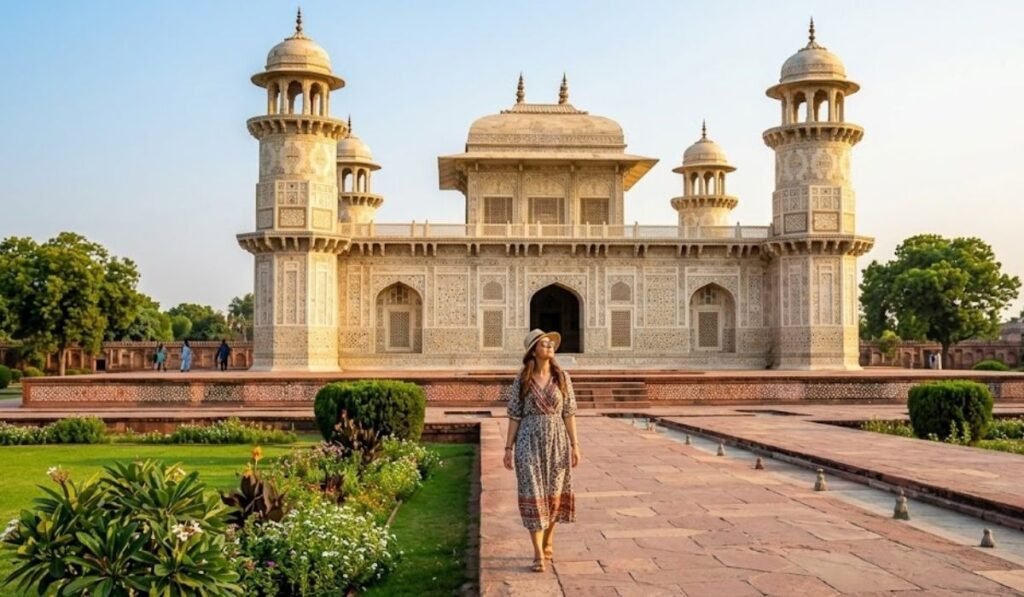
Often called the Baby Taj, the Tomb of Itimad-ud-Daulah is one of the most elegant Mughal monuments in Agra.
Constructed in the early 17th century, this beautiful tomb was built for Mirza Ghiyas Beg, a prominent figure in the Mughal court and the grandfather of Mumtaz Mahal.
The monument features intricate marble inlay work, delicate carvings, and symmetrical gardens that reflect the architectural style later perfected in the Taj Mahal.
Many historians believe that the design of Itimad-ud-Daulah inspired the construction of the Taj Mahal itself.
Despite its incredible beauty, the site receives far fewer visitors than other major monuments in Agra.
For travelers interested in Mughal history and architecture, this site remains one of the most fascinating hidden places in Agra.
Chini Ka Rauza – The Forgotten Persian Tomb
Chini Ka Rauza is one of the most unique historical monuments in Agra.
Unlike other Mughal buildings made primarily of sandstone or marble, this tomb features Persian-style glazed tiles that once covered its exterior walls.
The monument was built in memory of Afzal Khan, a scholar and poet who served in the court of Emperor Shah Jahan.
Although many of the decorative tiles have faded over time, the structure still reflects the artistic influences that shaped Mughal architecture.
Because it is located away from the main tourist areas, Chini Ka Rauza remains one of the least visited monuments in the city.
Travelers interested in history and architecture will appreciate the peaceful surroundings and unique design of this hidden site.
Soami Bagh Temple – A Marble Masterpiece
Among the lesser-known attractions in Agra, the Soami Bagh Temple stands out as an extraordinary architectural achievement.
This magnificent marble temple has been under construction for more than a century. Skilled artisans continue to carve intricate floral patterns, pillars, and sculptures from white marble.
The craftsmanship found in this temple rivals that of many famous monuments in India.
Unlike popular tourist attractions, Soami Bagh is primarily a spiritual site associated with the Radhasoami faith.
Visitors often describe the temple as a peaceful and inspiring place where they can admire remarkable craftsmanship while experiencing a calm spiritual atmosphere.
Hidden Places in Jaipur Most Tourists Miss
Jaipur, the capital of Rajasthan, is known for its grand palaces and historic forts. However, the city also has several hidden attractions that reveal fascinating aspects of its history and culture.
Panna Meena Ka Kund – Jaipur’s Ancient Stepwell
Located near Amber Fort, Panna Meena Ka Kund is one of the most visually striking stepwells in Rajasthan.
Stepwells were historically used to collect and store rainwater, providing an essential water source in the desert regions of India.
The geometric staircases of this stepwell create a mesmerizing pattern that makes it a favorite spot for photographers and architecture enthusiasts.
Despite being located near one of Jaipur’s most popular attractions, many tourists still overlook this remarkable structure.
Nahargarh Stepwell – A Hidden Architectural Wonder
Nahargarh Stepwell, also known as Nahargarh Baori, is another fascinating historical site in Jaipur.
The deep rectangular structure and perfectly arranged staircases showcase the ingenuity of ancient water management systems.
Although it lies close to major tourist routes, very few visitors take the time to explore this architectural gem.
For travelers searching for hidden places in Jaipur, this stepwell offers both historical insight and beautiful photography opportunities.
Galtaji Temple – The Monkey Temple
Nestled among rocky hills just outside Jaipur, Galtaji Temple is one of the city’s most unique religious sites.
The temple complex consists of several temples, sacred water tanks, and natural springs surrounded by scenic landscapes.
Large groups of monkeys inhabit the area, giving the temple its popular nickname — the Monkey Temple.
Despite its beauty and cultural importance, many international tourists are unaware of this fascinating destination.
Visitors who explore the temple often find it to be one of the most memorable experiences in Jaipur.
Patrika Gate – Jaipur’s Most Colorful Hidden Spot
Patrika Gate is one of the most vibrant and photogenic places in Jaipur.
Located at Jawahar Circle Garden, the gate features beautifully painted murals that showcase the culture, history, and traditions of Rajasthan.
Each archway displays detailed artwork representing different regions of the state.
Although it has gained popularity among photographers and social media travelers, many tourists still miss this colorful landmark.
Chand Baori – The World’s Most Incredible Stepwell
Located in the village of Abhaneri near Jaipur, Chand Baori is one of the largest and deepest stepwells in the world.
Built more than a thousand years ago, the structure contains over 3,500 narrow steps arranged in a perfectly symmetrical pattern.
The stepwell descends more than 20 meters into the ground and represents one of the most impressive examples of ancient Indian engineering.
For travelers interested in history, architecture, and photography, Chand Baori is an extraordinary place to explore.
Best Time to Visit Hidden Places in Agra and Jaipur
The best time to explore hidden places in Agra and Jaipur is between October and March, when the weather is cooler and more comfortable.
During these months, travelers can enjoy sightseeing without the extreme heat of summer.
Winter mornings in Agra are especially beautiful, while Jaipur’s historic monuments appear even more stunning in the soft winter sunlight.
Travel Tips for Exploring Hidden Places in Agra and Jaipur
Travelers who want to discover offbeat attractions should plan their itinerary carefully.
Hiring a local guide can help visitors uncover hidden places that are not widely known.
Photography enthusiasts should also bring a camera because many of these locations offer stunning architectural details and unique perspectives.
Conclusion – Discover the Hidden Side of the Golden Triangle
While the Taj Mahal and Amber Fort are undeniably breathtaking, the true magic of travel often lies in discovering places that most tourists overlook.
From peaceful Mughal gardens in Agra to ancient stepwells in Rajasthan, these hidden destinations reveal a deeper and more authentic side of India’s Golden Triangle.
Exploring these hidden places in Agra and Jaipur allows travelers to experience history, culture, and architecture in a more meaningful way.
Sometimes, the most unforgettable travel experiences happen in the places that most tourists never visit.
Frequently Asked Questions
What are some hidden places in Agra besides the Taj Mahal?
Some hidden places in Agra include Mehtab Bagh, Itimad-ud-Daulah (Baby Taj), Chini Ka Rauza, and Soami Bagh Temple.
Are there hidden places to visit in Jaipur?
Yes, Jaipur has several hidden attractions such as Panna Meena Ka Kund, Nahargarh Stepwell, Galtaji Temple, Patrika Gate, and Chand Baori.
Is Chand Baori worth visiting?
Yes, Chand Baori is one of the most impressive stepwells in India and offers a unique historical experience near Jaipur.
When is the best time to visit Agra and Jaipur?
The best time to visit is between October and March when the weather is cooler and ideal for sightseeing.