


India doesn’t greet you quietly.
It surrounds you — with color, sound, aroma, architecture, people, stories, and contrasts that feel almost cinematic. For many first-time visitors, that’s both exciting and overwhelming. One moment you’re looking at a marble masterpiece built for love, the next you’re navigating a spice market filled with centuries-old traditions.
If you’re planning your first trip, you might be asking:
Where should I even start?
Is India safe?
Which places are comfortable for foreign tourists?
How do I avoid culture shock but still experience the real India?
You’re not alone.
India is vast — geographically, culturally, and emotionally. Snow-covered Himalayan towns exist alongside tropical beaches. Spiritual river rituals coexist with royal palaces and modern cities. Choosing the right destinations can make the difference between feeling overwhelmed… and falling in love with the country.
The good news? Travel in 2026 is easier than ever. India’s e-Visa system is streamlined, airport infrastructure has improved significantly, highways connecting major tourist cities are smoother, and international tourism standards are more structured.
As someone who works closely with international travelers year-round, I’ve seen what works best for first-time visitors.
Here are the best places to visit in India for foreign tourists — based on comfort, safety, accessibility, and overall experience.
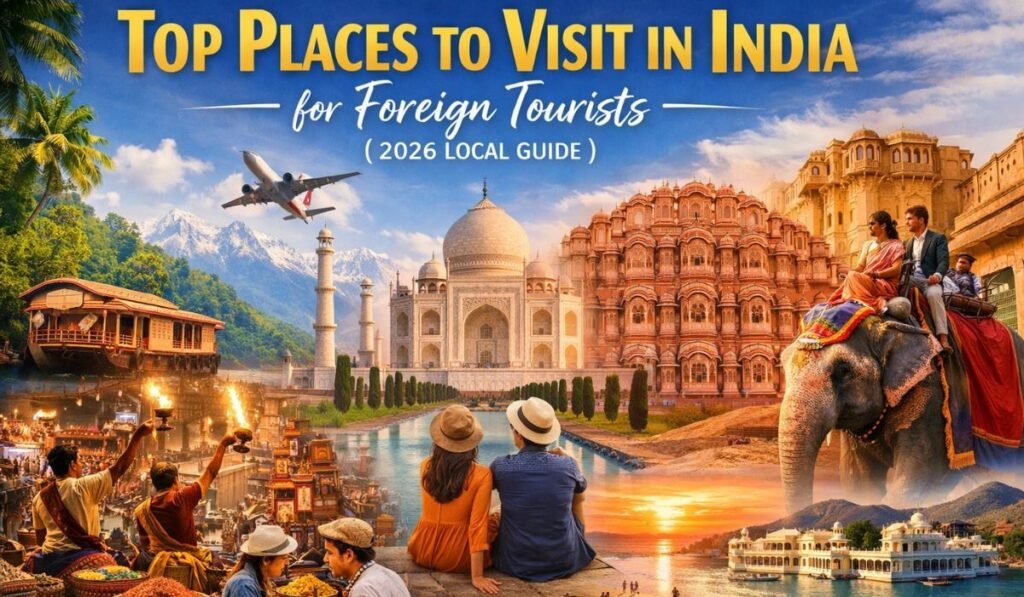
What Are the Best Places to Visit in India for Foreign Tourists?
If you want a quick, trusted answer, start with these destinations:
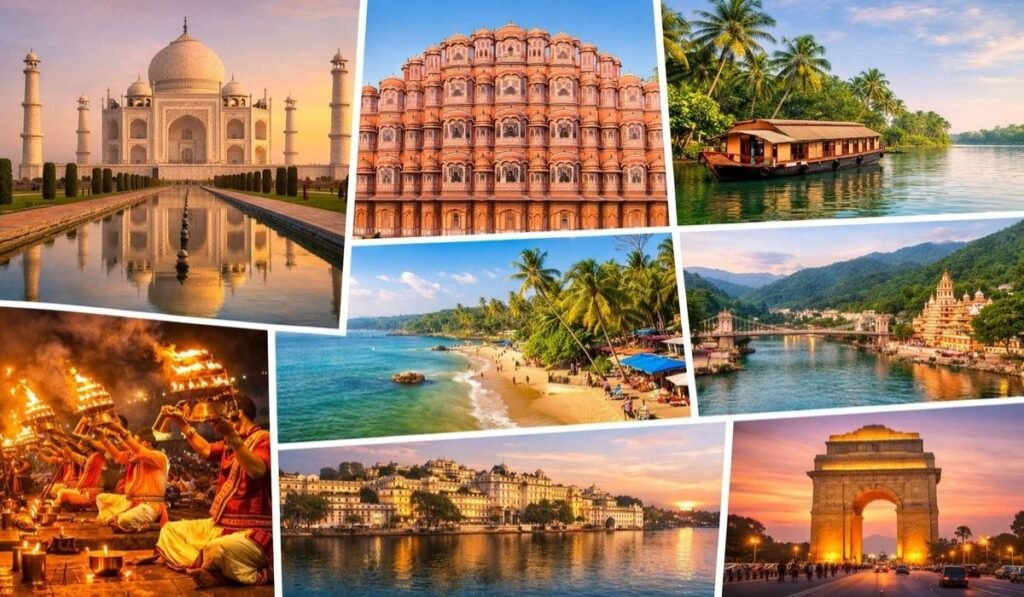
- Delhi – Cultural and historical gateway to India
- Agra – Home of the Taj Mahal
- Jaipur – Royal palaces and forts of Rajasthan
- Kerala – Backwaters, nature, and wellness
- Varanasi – Spiritual heart of India
- Goa – Beaches and relaxed coastal life
- Udaipur – Romantic lakes and heritage hotels
- Rishikesh – Yoga, Himalayas, and adventure
These places are tourist-friendly, well connected, and ideal for first-time foreign travelers.
1. Delhi, Agra & Jaipur – The Classic Golden Triangle
If there’s one route that consistently works for first-time visitors, it’s the Golden Triangle: Delhi, Agra, and Jaipur.
This circuit forms a triangle on the map and offers a powerful introduction to India’s history, architecture, cuisine, and culture — all within a manageable travel distance.
Why It’s Perfect for First-Time Visitors
- Excellent road and rail connectivity
- International airport in Delhi
- Abundance of quality hotels
- English-speaking guides
- Structured sightseeing routes
You experience Mughal grandeur, Rajput royalty, colonial architecture, vibrant bazaars, and modern India — all in one journey.
Delhi – Capital & Cultural Contrast
Delhi is where most international travelers land. It’s dynamic, layered, and full of contrast.
In Old Delhi, you’ll walk through centuries-old lanes near Jama Masjid and bustling markets like Chandni Chowk. In New Delhi, wide boulevards lead to landmarks like India Gate and Humayun’s Tomb.
It’s chaotic at times — but in a controlled way if planned well. With a private driver or structured tour, Delhi becomes fascinating instead of overwhelming.
Agra – The Taj Mahal Experience
Agra is home to the legendary Taj Mahal.
Nothing truly prepares you for seeing it in person.
My strongest advice: visit at sunrise. The marble shifts from pink to ivory as the sun rises, and the crowds are thinner. A knowledgeable guide makes a big difference — you’ll understand the symmetry, symbolism, and craftsmanship instead of just taking photos.
Agra also offers Agra Fort and local marble inlay workshops worth visiting.
Jaipur – Royal Rajasthan
Jaipur, known as the Pink City, introduces you to royal India.
Amer Fort sits dramatically on a hilltop, while Hawa Mahal creates one of the most photographed facades in India.
Jaipur feels colorful yet organized. Its markets are ideal for textiles, jewelry, and handicrafts — but always shop with guidance to avoid tourist pricing traps.
For first-time foreign tourists, the Golden Triangle offers the safest and most balanced introduction to India.
2. Kerala – Backwaters, Nature & Ayurveda
Kerala feels like a different country compared to North India.
Life moves slower. The air feels humid and tropical. Coconut palms line quiet canals.
Foreign travelers love Kerala for:
- Houseboat cruises in Alleppey
- Authentic Ayurvedic wellness retreats
- Tea plantations in Munnar
- High literacy and tourism awareness
It’s less chaotic and ideal for couples, retirees, and wellness seekers.
Best time to visit: October to March.
3. Varanasi – India’s Spiritual Heart
Varanasi is one of the world’s oldest living cities.
The evening Ganga Aarti ceremony along the river is deeply moving — rhythmic chants, lamps, and devotion unfolding before you.
But Varanasi requires sensitivity:
- Dress modestly
- Hire a local guide
- Be respectful while photographing rituals
It’s intense, emotional, and unforgettable — but best combined with other structured destinations.
4. Goa – Beaches, Culture & Nightlife
Goa offers tropical relaxation with a European-influenced past.
North Goa is lively — beach clubs and social energy.
South Goa is quieter — ideal for peaceful stays.
Best time: November to February.
Goa is popular among solo travelers, digital nomads, and couples seeking downtime after cultural exploration.
5. Udaipur – India’s Most Romantic City
Udaipur feels intimate and elegant.
Lake Pichola reflects palace walls at sunset, and the City Palace complex offers panoramic views of the city.
It’s calm, photogenic, and perfect for couples or luxury seekers.
6. Rishikesh – Yoga Capital of the World
Rishikesh sits along the Ganges at the foothills of the Himalayas.
Known globally for yoga teacher training programs, it blends spirituality and adventure — river rafting, meditation retreats, mountain walks.
Ideal for solo travelers and wellness-focused visitors.
Best Time to Visit India in 2026
India’s size means climate varies significantly.
Winter (October–March)
Best overall season. Pleasant temperatures in North India. Peak tourism period.
Summer (April–June)
Hot in the north but cheaper hotels. Hill stations and Himalayan regions remain comfortable.
Monsoon (July–September)
Lush landscapes, fewer crowds, and great photography opportunities — especially in Kerala and Rajasthan.
For first-time visitors, winter remains the safest and most comfortable choice.
Important Travel Tips for Foreign Visitors
e-Visa: Apply online before arrival. Processing is generally smooth for major nationalities.
Dress Code: Modest clothing is appreciated, especially in temples and rural areas.
Food Safety: Eat at reputable restaurants or hotel dining areas. Avoid raw street food initially.
Transport: Use pre-booked drivers or verified taxis instead of random street transport.
SIM Card: Purchase at the airport with passport copy for easy connectivity.
Cultural Etiquette: Remove shoes before entering temples. Ask before photographing people.
India is safe when approached with awareness and proper planning.
Suggested 10-Day India Tour for First-Time Visitors
Day 1–3: Delhi
Day 4: Agra
Day 5–6: Jaipur
Day 7–8: Udaipur or Kerala
Day 9–10: Goa or Rishikesh
Many travelers combine these destinations through a customized Golden Triangle tour with extensions to match their interests — culture, relaxation, or spirituality.
Final Thoughts
India rewards thoughtful travel.
Start with structured destinations like the Golden Triangle. Balance intense cultural experiences with relaxation spots like Kerala or Goa. Give yourself time to absorb, not just tick boxes.
With good planning, India is not overwhelming — it’s transformative.
About the Author
This guide is written by a local Indian travel specialist with years of on-ground experience designing private journeys across North and South India. Having personally assisted hundreds of international travelers, the focus has always been on creating smooth, culturally rich, and well-structured experiences for first-time visitors and returning guests alike.
Our team has served travelers from the USA, UK, Canada, Australia, and across Europe. With an experienced operational ground team, licensed multilingual guides, and updated knowledge of 2026 tourism guidelines, we prioritize safety, comfort, transparency, and authentic cultural immersion.
We believe India should feel immersive — not stressful. Every itinerary is carefully personalized based on travel style, comfort preference, and pace, ensuring that each journey feels meaningful rather than rushed.
India Golden Triangle Tours is dedicated to delivering safe, well-planned, and unforgettable travel experiences across Delhi, Agra, Jaipur, and beyond — combining local expertise with international service standards.
Frequently Asked Questions – Visiting India for the First Time
1. Is India safe for foreign tourists in 2026?
Yes, India is generally safe for foreign tourists, especially in major tourist cities like Delhi, Jaipur, Agra, Udaipur, and Kerala. Tourism infrastructure has improved significantly, and police presence in key tourist areas is strong.
Like any country, basic precautions apply:
- Avoid isolated areas late at night
- Use licensed guides and verified transport
- Book hotels with good reviews
Most travelers who plan properly experience India as welcoming and culturally rich rather than unsafe.
2. Do foreign tourists need a visa to visit India?
Yes, most foreign nationals require a visa. India offers a convenient e-Visa system for tourism purposes.
You can apply online before travel, and approvals typically arrive within a few days. Always apply through the official government portal and ensure your passport is valid for at least six months from arrival.
3. What is the best itinerary for first-time visitors to India?
The most recommended route for first-time travelers is the Golden Triangle — Delhi, Agra, and Jaipur.
This 6–7 day circuit covers:
- Mughal architecture (including the Taj Mahal)
- Royal palaces and forts
- Bustling markets and cultural experiences
Many travelers extend this trip to Goa, Kerala, or Udaipur for relaxation.
4. When is the best time to visit India?
The best time for most foreign tourists is October to March.
During winter months:
- North India has pleasant weather
- Sightseeing is comfortable
- Wildlife parks are open
- Festivals create vibrant experiences
Summer can be very hot in cities like Delhi and Agra, while the monsoon season offers fewer crowds and lush landscapes, especially in Kerala.
5. How many days are enough for a first trip to India?
For a balanced experience, plan 8 to 12 days.
- 6–7 days for Golden Triangle
- 10 days to include a relaxation destination
- 14+ days for deeper cultural exploration
Shorter trips are possible, but India rewards a slower pace.
6. Is the Taj Mahal worth visiting?
Absolutely. The Taj Mahal is one of the most iconic monuments in the world and consistently exceeds expectations.
Visiting at sunrise offers:
- Softer light for photography
- Fewer crowds
- Cooler temperatures
Most foreign visitors describe it as the emotional highlight of their India trip.
7. Can I drink tap water in India?
No. Foreign tourists should avoid drinking tap water.
Use:
- Sealed bottled water
- Hotel-filtered water
- Avoid ice in unknown establishments
Stick to reputable restaurants and freshly cooked hot food to minimize stomach issues.
8. Is India suitable for solo female travelers?
Yes, with proper planning. Many solo female travelers visit cities like Rishikesh, Udaipur, and Goa safely every year.
Recommendations:
- Dress modestly
- Avoid walking alone late at night
- Use pre-arranged transfers
- Stay in reputable hotels
India is culturally conservative in some regions, so awareness and preparation go a long way.
9. How much does a 10-day trip to India cost?
Costs vary depending on comfort level:
- Budget travel: $800–$1,200
- Mid-range private tour: $1,500–$2,500
- Luxury experience: $3,000+
Private guided tours cost more but significantly reduce stress, improve safety, and enhance understanding.
10. Should I book a private tour or travel independently?
For first-time visitors, a private guided tour is highly recommended.
Benefits include:
- Language support
- Cultural explanation
- Pre-arranged logistics
- Time efficiency
- Reduced risk of scams
Independent travel is possible, but India’s complexity can be overwhelming without local assistance.
11. Is India overwhelming for first-time visitors?
It can feel intense at first — due to crowds, traffic, and sensory stimulation. However, structured travel planning dramatically reduces stress.
Starting with organized destinations like the Golden Triangle and adding a calm destination such as Kerala or Goa creates balance.
12. Do people in India speak English?
Yes. English is widely spoken in tourist areas, hotels, airports, and by licensed guides. Communication is generally not a problem for international visitors.