


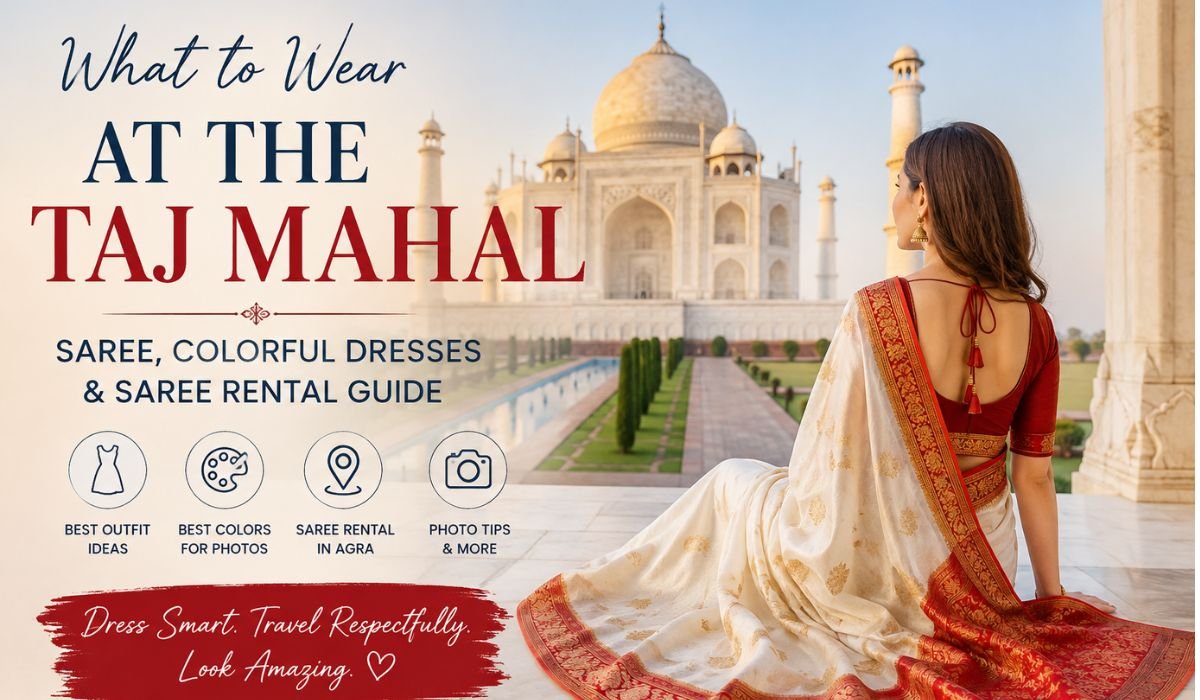
Planning a trip to the Taj Mahal and wondering what to wear? You are not alone. This is one of the most common questions travelers ask before visiting Agra, and it makes sense. The Taj Mahal is not just a tourist attraction. It is a mausoleum, a UNESCO World Heritage Site, and one of the most photographed monuments on earth.
There is no official Taj Mahal dress code enforced by law. But that does not mean clothing does not matter. What you wear affects your comfort in Agra’s heat, your photos against the white marble, and how respectfully you engage with a site of deep cultural and historical importance.
This guide covers everything you need to know: whether a dress code exists, what outfits work best for men and women, which colors photograph beautifully, and where to rent a saree near the Taj Mahal if you want that iconic traditional look. Whether you are chasing sunrise photos or planning a relaxed afternoon visit, this Taj Mahal outfit guide will help you dress smart, stay comfortable, and look great doing it.
Is There an Official Dress Code at the Taj Mahal?
No, there is no official, legally enforced dress code at the Taj Mahal. The Archaeological Survey of India (ASI), which manages the monument, has not published a formal clothing policy. You will not be turned away at the gate for wearing shorts or a sleeveless top.
That said, dressing modestly is strongly recommended, and most experienced travelers choose to do so. Here is why it matters.
Cultural respect. The Taj Mahal is a mausoleum, built as a tomb for Mumtaz Mahal. It carries religious and historical weight for millions of people. Covering your shoulders and knees is a simple way to show respect for that significance.
Security considerations. Security staff at the entrance may look more closely at visitors in very revealing outfits, though this rarely results in denied entry. Dressing modestly also helps you avoid unwanted attention, which some travelers, especially solo women, prefer to sidestep entirely.
Footwear rules. You will need to remove your shoes or wear disposable shoe covers before stepping onto the white marble platform surrounding the main mausoleum. Shoe covers are usually provided free of charge, so slip-on footwear makes this step much easier.
Seasonal reality. Agra’s climate swings from scorching summers to chilly winter mornings. Your outfit needs to work with the weather, not against it, since you will be walking and standing outdoors for extended periods.
Quick Takeaway: There is no strict Taj Mahal dress code, but modest, comfortable clothing that covers shoulders and knees is the safest and most respectful choice. Choose slip-on shoes, dress for the season, and skip anything too tight, too short, or too heavy.
What Should You Wear at the Taj Mahal?
The best Taj Mahal outfit balances three things: comfort, modesty, and how it photographs against white marble. Here is what to wear at the Taj Mahal, broken down by gender.
For Women
- Sarees — elegant, traditional, and stunning in photos, though they require some practice to walk in comfortably
- Salwar suits — loose, breathable, and easy to move in for hours of walking
- Maxi dresses — flowing, modest, and effortless for both sightseeing and photos
- Long skirts — pair well with a simple top and offer great coverage
- Linen outfits — lightweight and breathable, ideal for Agra’s heat
- Cotton dresses — soft, cool, and practical for long days outdoors
- Comfortable shoes — flats, sandals, or sneakers rather than heels
For Men
- Linen shirts — breathable and cool, perfect for daytime visits
- Polo shirts — smart-casual and easy to move in
- Cotton shirts — a safe, comfortable choice year-round
- Chinos — lightweight trousers that look neat in photos
- Jeans — allowed and popular, though a relaxed fit is better than tight denim in summer
- Kurta — a traditional option that photographs beautifully against the marble
- Sneakers — practical for walking and easy to slip on and off
For both men and women, the goal is the same: pick fabrics and cuts that let you walk long distances comfortably. The Taj Mahal complex is large, and you will be on your feet for at least two to three hours, so breathable materials and comfortable shoes matter more than you might expect.
Best Colors to Wear at the Taj Mahal
The Taj Mahal’s white marble acts like a giant reflector and a neutral backdrop, which means color choice has a huge impact on your photos. Bold, saturated colors tend to stand out beautifully, while pale or overly bright whites can wash out or blend into the monument.
- Red — bold and striking, one of the most popular photo choices
- Yellow — warm and vibrant, especially strong in daylight
- Royal Blue — rich and elegant against white marble
- Emerald Green — deep and jewel-toned, photographs beautifully
- Pink — soft yet vivid, flattering in both daytime and golden hour light
- Orange — energetic and eye-catching, especially at sunset
- Lavender — a gentle pastel that adds contrast without overpowering
- Black — dramatic and sharp, creates strong contrast with the marble
- White — elegant but risky, as it can blend into the monument in bright light
- Beige — subtle and classic, works well for softer, understated photos
- Pastel Shades — soft and romantic, ideal for sunrise visits
Color Comparison Table
| Color | Photo Result | Best Time |
| Red | Bold, high contrast | Midday or sunset |
| Yellow | Warm, vibrant pop | Morning to midday |
| Royal Blue | Rich, elegant contrast | Any time |
| Emerald Green | Deep, jewel-toned | Midday |
| Pink | Soft, flattering | Sunrise or golden hour |
| Orange | Energetic, warm glow | Sunset |
| Lavender | Gentle pastel contrast | Sunrise |
| Black | Dramatic, sharp | Midday |
| White | Elegant but can blend in | Overcast days only |
| Beige | Subtle, classic | Any time |
| Pastel Shades | Romantic, soft light | Sunrise |
Traditional Indian Outfit Ideas
If you want that classic, postcard-worthy Taj Mahal photo, a traditional Indian outfit is hard to beat. Here are the most popular choices among tourists.
- Sarees — the most iconic choice, with endless color and fabric options
- Banarasi Sarees — rich, silk-woven sarees with intricate patterns, ideal for statement photos
- Cotton Sarees — lighter and cooler, better suited to hot weather
- Chiffon Sarees — flowy and lightweight, great for movement in photos
- Lehengas — festive and dramatic, though heavier and less practical for long walks
- Anarkali Suits — flowing, floor-length, and comfortable to walk in
- Indo-Western outfits — a fusion look that blends traditional fabric with modern silhouettes
For tourists who are not used to draping a saree, cotton sarees and Anarkali suits tend to be the most comfortable options. They offer that traditional look without the styling challenges of a heavier silk saree or lehenga.
Western Outfit Ideas
If Indian traditional wear is not your style, plenty of Western outfits work just as well for a Taj Mahal outfit for photos.
- Maxi dresses — flowing, modest, and effortless
- Midi dresses — a practical length that still photographs well
- Jumpsuits — stylish and comfortable, with fewer layers to manage
- Linen shirts — paired with trousers or a skirt for a relaxed look
- Wide-leg pants — comfortable for walking and elegant in photos
- Long skirts — versatile and easy to pair with different tops
- Co-ord sets — matching two-piece outfits that look put-together with minimal effort
Western outfits made from breathable fabrics like linen and cotton offer the same comfort benefits as their Indian counterparts, while still standing out against the marble backdrop in photos.
Saree Rental at the Taj Mahal
Not every traveler packs a saree, and that is exactly why saree rental has become so popular near the Taj Mahal. Renting lets you enjoy the traditional Taj Mahal photography outfit experience without buying or carrying one home.
Why tourists rent sarees. Draping and styling a saree takes practice, and rental studios usually include draping help, so you get the look without the guesswork.
Approximate rental prices. Prices generally range from a few hundred to a couple of thousand rupees, depending on the fabric, design, and whether accessories are included. Silk and Banarasi sarees cost more than simple cotton ones.
Rental duration. Most rentals are offered for a few hours, which is usually enough time for your Taj Mahal visit and photo session.
Security deposit. Some rental providers ask for a refundable security deposit or ID proof, especially for higher-value sarees.
Availability. Availability can vary by season and by provider, so it helps to book in advance during peak tourist months.
Matching accessories. Many rental packages include bangles, earrings, a bindi, and sometimes a matching clutch or dupatta.
Photographer packages. Several studios bundle saree rental with a professional photographer, which is a popular option for couples and solo travelers who want polished photos.
Makeup options. Basic hairstyling and makeup add-ons are often available for an extra fee, useful if you want a complete traditional look.
Keep in mind that availability, pricing, and package details can vary between providers and change over time, so it is worth confirming details directly before your visit.
Where to Rent a Saree Near the Taj Mahal
There are several ways to arrange saree rental near the Taj Mahal, each with its own advantages.
- Local rental studios — small shops near Agra’s tourist areas that specialize in saree and outfit rentals for visitors
- Photography studios — many combine outfit rental with a guided photo session at the monument
- Tour packages — some Agra tour operators include saree rental as an add-on experience
- Hotels — certain hotels in Agra offer in-house rental or can arrange it through a trusted local partner
- Airbnb hosts — some hosts offer saree rental or draping services as part of a local experience package
Tips for Choosing a Reliable Rental Provider
- Read recent reviews before booking, especially from other international travelers
- Ask about the total cost upfront, including any deposit
- Confirm what is included, such as accessories, draping help, or photography
- Check the fabric and condition of the saree before wearing it
- Book a day or two in advance during busy travel seasons
Best Outfit Ideas for Couples
Matching or coordinated outfits are a favorite for couples visiting the Taj Mahal, since complementary colors create balanced, eye-catching photos.
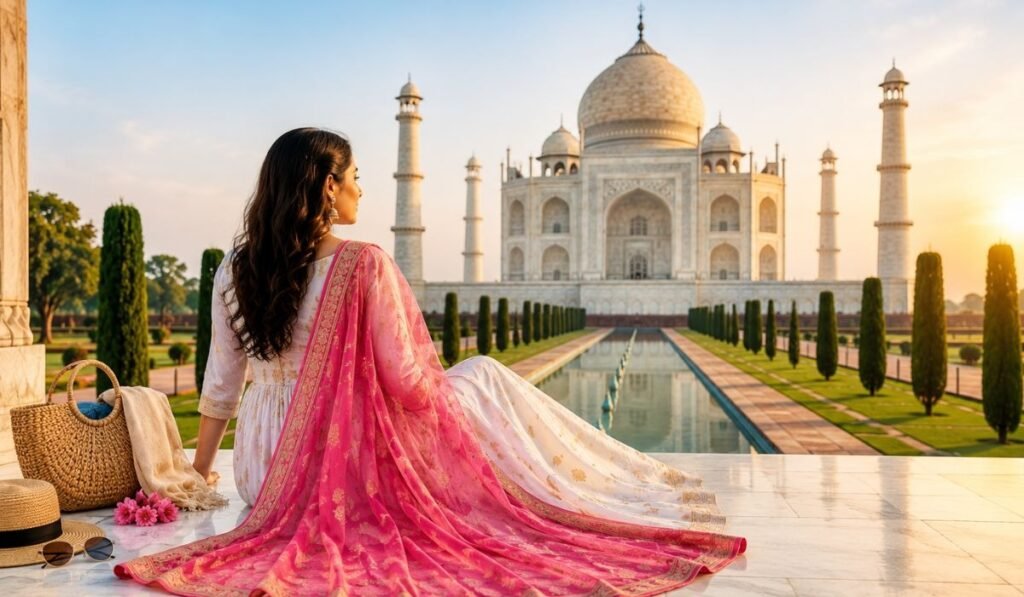
- Red & White — classic and bold, with strong contrast against the marble
- Blue & Cream — calm and elegant, works well in daylight
- Black & Gold — dramatic and rich, ideal for statement photos
- Pastel Pink & White — soft and romantic, especially at sunrise
- Yellow & Beige — warm and cheerful, photographs well in golden light
These pairings work because they complement each other without competing for attention, and they both stand out clearly against the white marble backdrop.
What NOT to Wear
A few outfit choices can make your visit less comfortable or less respectful. Here is what to avoid.
- High heels — the complex has uneven stone pathways, making heels impractical and uncomfortable for long walks
- Heavy winter jackets in summer — Agra summers are extremely hot, and bulky layers add unnecessary discomfort
- Very short clothing — mini skirts or very short shorts may draw unwanted attention and are seen as less respectful at this site
- Tight, uncomfortable clothes — restrictive clothing makes walking and standing for hours far less pleasant
- Expensive jewelry — flashy jewelry can attract unwanted attention in crowded tourist areas
- Large handbags — big bags slow you down at security checks and are tiring to carry around the complex
Seasonal Outfit Guide
Agra’s weather changes dramatically across the year, so your Taj Mahal outfit should adjust with the seasons.
Summer (March–June)
- Fabric: Lightweight cotton and linen to handle intense heat
- Footwear: Breathable sandals or open shoes
- Accessories: A wide-brimmed hat and sunglasses for sun protection
- Layering: Minimal, since temperatures can climb well above 35°C (95°F)
Monsoon (July–September)
- Fabric: Quick-drying synthetic blends or light cotton
- Footwear: Waterproof sandals rather than sneakers, which can stay wet
- Accessories: A compact umbrella or lightweight raincoat
- Layering: A light waterproof layer for sudden showers
Winter (October–February)
- Fabric: Cotton layered with a light sweater or shawl
- Footwear: Closed shoes or sneakers for cooler mornings
- Accessories: A scarf or stole, especially useful for early sunrise visits
- Layering: A light jacket for cold mornings, which can be removed as the day warms up
Best Shoes for Visiting the Taj Mahal
Footwear might be the single most important part of your Taj Mahal outfit, since you will be walking across large courtyards and stone pathways.
- Sneakers — supportive and practical for long stretches of walking
- Flats — comfortable and easy to slip on and off before entering the mausoleum
- Walking shoes — ideal if you plan to explore beyond the Taj Mahal on the same day
- Sandals — breathable in hot weather, best with sturdy straps rather than flimsy soles
Comfort matters more than style here. You will remove your shoes or put on shoe covers at the marble platform, so slip-on options save time and hassle at that checkpoint.
Photography Outfit Tips
If great photos are a priority, a few small choices can make a big difference.
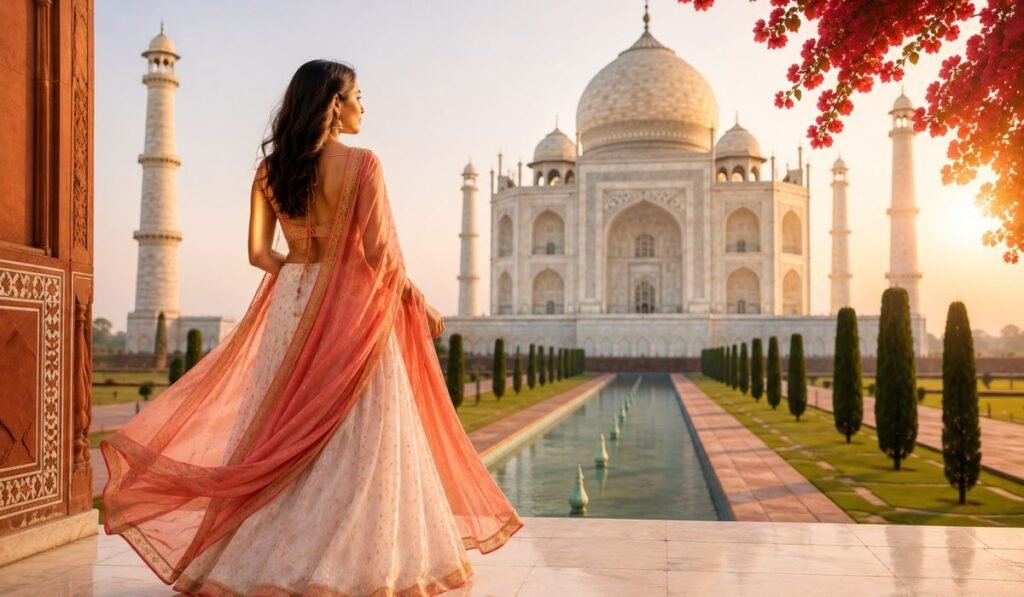
- Flowing dresses — sarees, maxi dresses, and Anarkali suits move beautifully in photos, especially with a slight breeze
- Contrast colors — bold shades against white marble create striking, high-impact images
- Sunrise outfits — pastel shades and soft colors suit the gentle morning light
- Sunset outfits — warm tones like orange, red, and yellow match the golden evening glow
- Couple photos — coordinated, not identical, colors look more natural together
- Family photos — choose a shared color palette so everyone complements each other without matching exactly
- Accessories — simple jewelry photographs better than heavy, busy pieces
- Sunglasses — useful for bright midday visits, though best removed for portrait shots
- Scarves — add movement and color to photos while doubling as sun protection
- Dupattas — a flowing dupatta creates elegant motion in traditional outfit photos
Essential Travel Tips
Beyond your outfit, a few practical details will make your Taj Mahal visit smoother.
- Entry timing — Travelers who prefer flexibility often choose a Same Day Taj Mahal Tour by Car, allowing them to arrive early for the best photography and avoid peak crowds.
- Weather — check the forecast the day before, since Agra’s temperature swings can be extreme
- Walking distance — the complex requires a fair amount of walking, so pace yourself
- Bag restrictions — large bags, tripods, drones, and selfie sticks are not allowed inside
- Water bottle — carry a small bottle, especially during summer visits
- Sunscreen — apply before entry, as there is little shade across the main courtyards
- Hat — a light hat helps during long midday visits
- Umbrella — useful for both sun protection and sudden monsoon showers
If you’re traveling from Rajasthan, a Same Day Agra Tour from Jaipur is a convenient way to visit the Taj Mahal while enjoying a comfortable day trip.
FAQs
Is there a dress code at the Taj Mahal?
No official dress code exists, but modest clothing that covers shoulders and knees is strongly recommended out of cultural respect.
Can I wear shorts?
You can, but shorts above the knee are not recommended and may draw extra attention from security staff or other visitors.
Can I wear a saree?
Yes, sarees are a popular and welcomed choice, and many tourists rent one specifically for their Taj Mahal visit.
Can foreigners wear Indian traditional clothes?
Absolutely. Sarees, salwar suits, and kurtas are commonly worn by international visitors and are a great way to experience local culture.
Where can I rent a saree?
Local rental studios, photography studios, tour operators, and some hotels near the Taj Mahal all offer saree rental services.
How much does saree rental cost?
Prices vary widely based on fabric and accessories, generally ranging from a few hundred to a couple of thousand rupees.
Which color looks best?
Bold colors like red, royal blue, emerald green, and yellow tend to photograph best against the white marble.
Can I wear heels?
Heels are not recommended, since the complex has uneven stone pathways that make walking in them uncomfortable.
Is white a good color?
White can look elegant but often blends into the marble in bright sunlight, so it is a riskier choice for photos.
What should I wear in summer?
Lightweight cotton or linen in breathable, loose-fitting styles, paired with sandals and sun protection, works best in Agra’s summer heat.
Conclusion
There is no official Taj Mahal dress code, but that does not mean your outfit does not matter. Choosing modest, comfortable clothing shows respect for a site of deep cultural and historical significance, while also keeping you comfortable through hours of walking in Agra’s often extreme weather.
Whether you choose a rented saree for that classic traditional look, a breezy linen dress, or a simple cotton shirt and chinos, the same rules apply: prioritize comfort, cover your shoulders and knees, and pick slip-on shoes for the marble platform. If photos are a priority, lean toward bold, saturated colors like red, royal blue, or emerald green, since they stand out beautifully against the white marble.
Plan around the season, pack light, and give yourself time to enjoy one of the world’s most iconic monuments without worrying about what you are wearing. With the right Taj Mahal outfit, you will be comfortable, respectful, and ready for photos you will treasure for years.
If you’re planning to explore more than Agra, India Golden Triangle Tours combine Delhi, Agra, and Jaipur into one unforgettable cultural journey.