


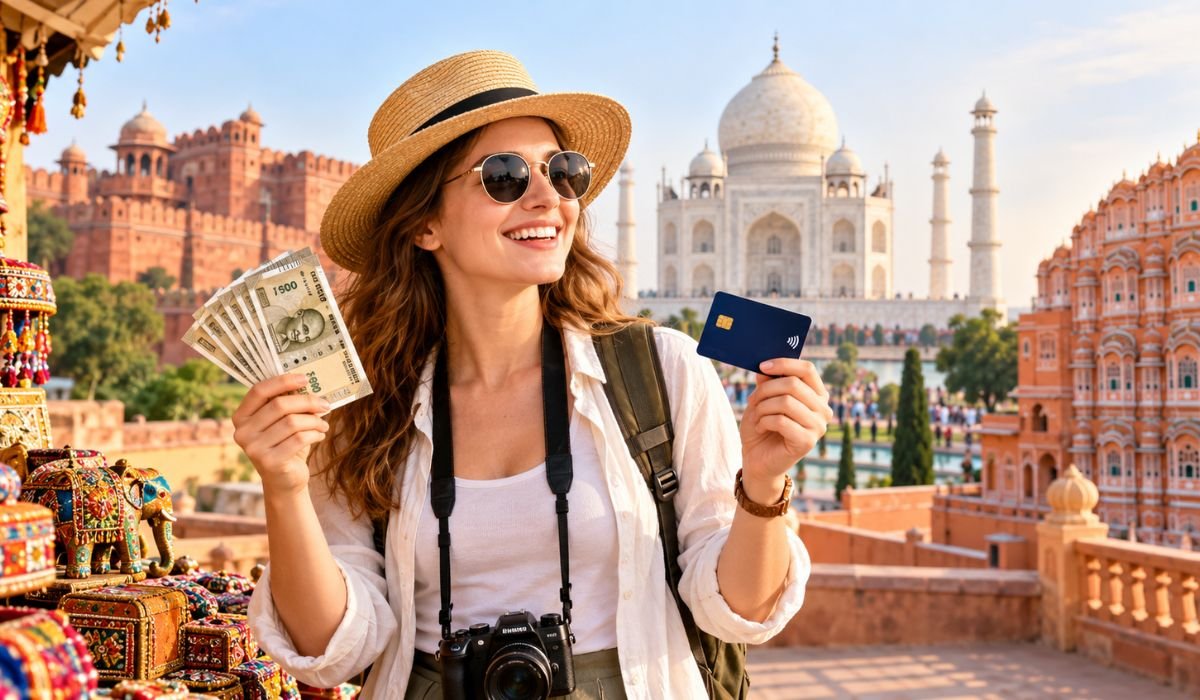
Most tourists should carry both. Cards work well at hotels, established restaurants, shopping centers and many organized businesses. Cash stays useful for small vendors, local markets, tips and transport, where card acceptance can be inconsistent. A mix of payment methods is the least stressful way to handle money in India.
If this is your first trip, that answer may feel vague. Below you’ll find where each method works best, how ATMs and UPI fit in, and what to expect in Delhi, Agra and Jaipur.
Should Tourists Use Cash or Cards in India?
The practical approach is not cash or card. It is cash and card.
| Payment Method | Best Used For | Main Advantage |
| Cash | Small purchases, tips, markets | Widely useful |
| Credit card | Hotels, restaurants, larger businesses | Convenient |
| Debit card | ATM withdrawals and purchases | Access to funds |
| Contactless card | Eligible card terminals | Quick payments |
| Mobile payments | Where supported | Convenient |
Cards handle the big, predictable expenses. Cash covers the small, spontaneous ones. Together they leave you prepared when one method fails.
Where Can Tourists Usually Pay by Card in India?
Cards are most commonly useful at:
- Hotels
- Established restaurants
- Shopping malls and major retail stores
- Tour operators
- Airports
- Larger tourist businesses
Acceptance varies by establishment, so don’t assume every small business takes international cards. Terminals can also be offline, or a card can be declined for reasons unrelated to you. Ask before you order or before a driver starts a ride.
If you are traveling through Delhi, Agra and Jaipur on a private Golden Triangle tour, keeping one card available for larger expenses while carrying some local currency for smaller purchases can make day-to-day payments easier.
When Is Cash Still Useful in India?
This is where cash matters most. Expect to need it for:
- Street food and small cafés
- Small shops and local vendors
- Local markets
- Auto-rickshaws
- Tips
- Rural or less-touristy stops
Small denominations are more convenient than large notes. Paying for a cheap snack or a short ride with a big note can be awkward if the seller lacks change. Break larger notes at hotels, restaurants or larger stores.
Still, don’t carry your entire travel budget in physical cash. Loss and theft are the obvious risks, and a moderate cash reserve plus cards is easier to protect.
Can Foreign Tourists Use UPI in India?
UPI (Unified Payments Interface) is India’s real-time mobile payment system. People scan a QR code, confirm on their phone and the merchant is paid within seconds. It is popular because it is fast, cheap and widely supported, so you will see QR codes at everything from large stores to roadside stalls.
Foreign visitors may be able to use it, but not automatically. UPI normally requires an Indian bank account and mobile number, which most tourists don’t have. India’s payments body, NPCI, has offered a prepaid wallet product called UPI One World for international visitors, typically with passport and visa verification. Availability has depended on the provider, your nationality, the period and current service support.
So don’t assume you can scan any QR code with your home banking app. Check NPCI‘s latest guidance before you travel, and bring a backup payment method either way.
How Much Indian Rupees Should Tourists Carry?
There is no single correct amount. It depends on:
- Trip length
- Travel style
- Accommodation
- Whether transport is prepaid
- Shopping plans
- Number of people traveling
- Whether cards are available as backup
A traveler with hotels, transport and major tours prepaid will have very different daily cash needs from someone paying for accommodation, meals and local transportation independently. Start with your likely small daily expenses (snacks, tips, short rides, entry fees) and add a buffer. You can always withdraw more.
Should You Exchange Money at the Airport?
Airport exchange is convenient and useful immediately after arrival, but rates may vary. Exchanging a small amount for first-day needs is a common compromise.
Banks and authorized exchange providers can be worth comparing. Check rates, fees and commissions, and keep your receipts.
ATMs are also convenient. Check your own bank’s international withdrawal fees, and read the fees the ATM displays before you proceed.
Which option is cheapest depends on your bank, the provider and the day, so compare current rates rather than trusting a rule of thumb. It also helps to avoid exchanging everything at once.
Using ATMs in India: What Tourists Should Know
Foreign cards can often be used at Indian ATMs, but limits and fees vary by bank and machine. Use this checklist:
- Use ATMs in secure, well-known locations, such as banks, airports and hotel lobbies.
- Check the machine for anything unusual before inserting your card.
- Be aware of international withdrawal fees.
- Check your bank’s foreign transaction policy.
- Keep your PIN private and shield the keypad.
- Don’t accept unsolicited assistance.
- Keep emergency cash separately.
- Notify your bank about international travel if it requires this.
Payment security is only one part of preparing for India. Travelers should also understand basic travel safety tips for the Golden Triangle before arriving.
Credit Card vs Debit Card in India: Which Should Tourists Carry?
Neither is the winner, because they do different jobs.
Credit card
- Useful for larger purchases
- May offer fraud protection, depending on the issuer
- Convenient at hotels and established businesses
- Foreign transaction fees may apply
Debit card
- Useful for ATM withdrawals
- Draws directly on your bank account
- May carry international withdrawal or transaction fees
Carry at least one backup payment method rather than relying on a single card. Keep the backup in a different bag or pocket.
Are Cards Safe to Use in India?
Yes, if you use ordinary precautions:
- Use trusted businesses.
- Check the amount on the terminal before approving.
- Keep banking notifications enabled.
- Avoid handing your card over unnecessarily. Ask to pay where you can see the terminal.
- Protect your PIN.
- Keep your bank’s emergency contact details somewhere other than your phone alone.
- Carry a backup card separately.
The goal is preparedness, not anxiety. Millions of travelers pay by card in India without problems.
Paying at Markets and Local Shops
Markets are where cash shines, and Jaipur’s bazaars are a good example. Some markets expect bargaining, so a first price is often a starting point.
- Confirm the final price before paying.
- Ask whether the quote is for one item or several.
- Carry smaller notes to avoid change problems.
- Don’t display large amounts of cash.
- Keep receipts for expensive purchases.
If shopping, local markets and cultural experiences are an important part of your trip, a longer itinerary such as the Golden Triangle Tour 7 Days gives you more time to explore without compressing every experience into a short schedule.
Do You Need Cash on a Golden Triangle Tour?
Yes, a little. Expect mixed payment situations rather than one method working everywhere.
Delhi: Hotels, restaurants, attractions, transport and shopping. Cards are commonly useful at larger venues, and cash helps for smaller purchases and tips.
Agra: Taj Mahal-area purchases, restaurants, souvenirs, local vendors and tips. Some vendors may prefer cash, so keep small notes handy.
Jaipur: Markets, handicrafts, restaurants, attractions and local shopping. Cards may work at larger shops, while smaller stalls often favor cash.
Travelers spending several days across Delhi, Agra and Jaipur may find it easier to plan a small daily cash reserve while using cards for larger expenses. For a more relaxed itinerary, a Golden Triangle Tour 5 Days gives travelers additional time for sightseeing, shopping and local experiences.
Common Payment Mistakes Tourists Make in India
- Carrying only cards
- Carrying too much cash
- Forgetting about foreign transaction fees
- Not having a backup card
- Using an unfamiliar ATM without checking fees
- Not keeping small denominations
- Assuming every QR code works with a foreign banking app
- Forgetting to monitor transactions
- Exchanging all money at once
- Not separating emergency cash from everyday spending money
7 Smart Money Tips for First-Time Visitors to India
- Carry both cash and cards.
- Keep some small Indian rupee notes.
- Carry a backup card separately.
- Check international fees before your trip.
- Use reputable ATMs and payment terminals.
- Keep emergency cash separate.
- Check every transaction before confirming it.
Cash or Card in India: What Should Tourists Choose?
For most tourists, the practical approach is to use both. Cards are convenient for larger and established businesses, while cash provides flexibility for smaller purchases and situations where electronic payment isn’t available. Before traveling, check your bank’s international fees, carry a backup payment method and keep enough local currency for everyday expenses.
Frequently Asked Questions
Is cash or card better in India for tourists?
Neither is better on its own. Cards suit hotels and established businesses, and cash suits markets, transport and tips. Carry both.
Can tourists use credit cards in India?
Yes, at many hotels, restaurants, malls and larger businesses. Acceptance varies, so ask before ordering and carry a backup.
Should I carry cash when traveling around India?
Yes, a modest amount in small notes. It helps with street food, auto-rickshaws, tips and small shops.
Can foreigners use UPI in India?
Sometimes. Options such as NPCI’s UPI One World wallet have been offered, but availability depends on provider, nationality and current service support. Check before you travel and keep a backup.
Can I withdraw Indian rupees from an ATM using a foreign card?
Often, yes. Fees and limits vary by your bank and the ATM, so check both before confirming.
How much cash should I carry in India?
It depends on trip length, travel style, prepaid costs and whether you have card backups. Start with small daily expenses plus a buffer.
Are credit cards widely accepted in Delhi, Agra and Jaipur?
They are commonly useful at hotels, larger restaurants and bigger shops. Smaller vendors and markets often prefer cash.
Should I exchange money before traveling to India?
A small amount for arrival can help. Compare current rates and fees, and avoid exchanging everything at once.
Is it safe to use ATMs in India?
Generally, if you choose secure, well-known locations, inspect the machine and protect your PIN. Decline unsolicited help.
What should I do if my card doesn’t work in India?
Try another terminal or method, then use your backup card or cash. If it keeps failing, contact your bank, since it may have blocked the transaction.