
Discover India Through Its Food
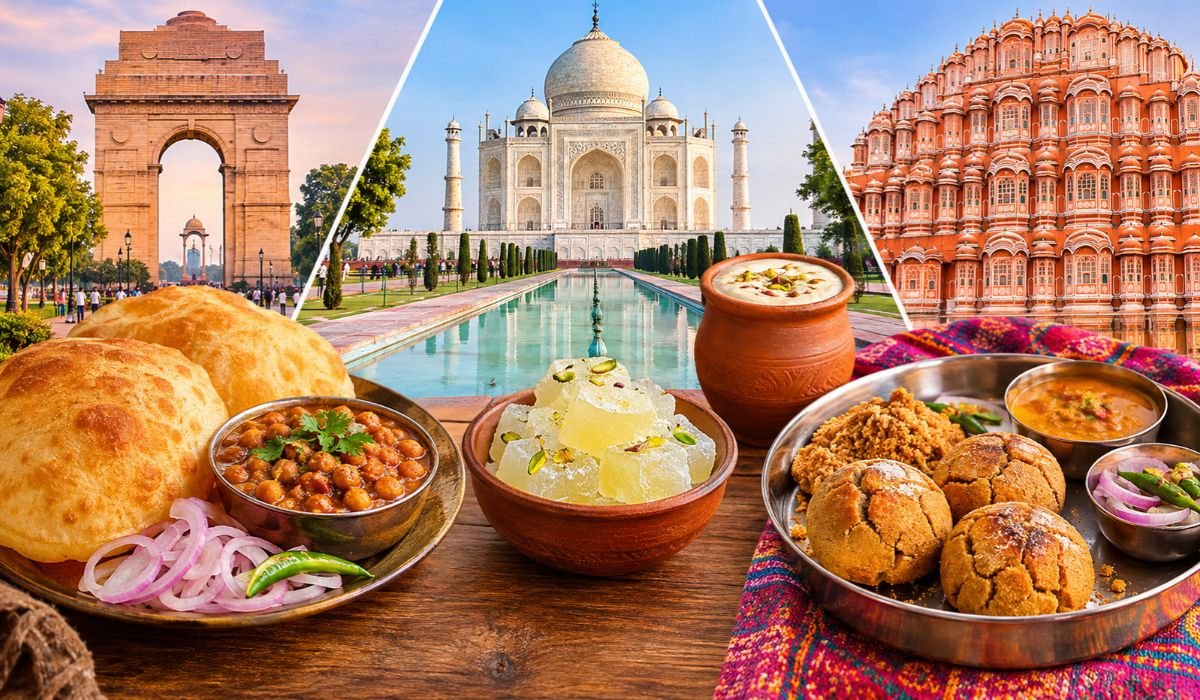
The Golden Triangle is usually planned around monuments, but the best Indian food experiences on this route are often what travellers remember longest. Delhi, Agra, and Jaipur sit only a few hours apart by road, yet each city eats very differently.
Delhi blends Mughlai, Punjabi, and everyday North Indian cooking. Agra carries the imprint of its Mughal past in rich meats, fragrant breads, and famous sweets. Jaipur reflects royal Rajasthani kitchens, where a dry desert climate shaped dishes built on lentils, gram flour, and dried vegetables.
This guide explains what to eat in each city, how to enjoy street food and sit-down meals with confidence, and how to fit food stops into a sightseeing itinerary without rushing.
Explore Delhi’s Famous Street Food and Traditional Cuisine
Delhi is the easiest place to start, because its food reflects every community that has settled here: Mughal court cooks, Punjabi families who arrived after 1947, and traders from across North India.
Dishes to try in Delhi
- Chole Bhature: spiced chickpea curry with puffed, deep-fried bread, usually a hearty breakfast or lunch.
- Aloo Tikki: crisp potato patties, often topped with yoghurt, chutneys, and chickpeas.
- Golgappa (Pani Puri): hollow crisp shells filled with spiced water, potato, and chickpeas, eaten in a single bite.
- Parathas: griddled flatbreads stuffed with potato, paneer, cauliflower, or radish, served with curd and pickle.
- Butter Chicken: tandoori chicken in a creamy tomato gravy, a Delhi classic and a gentle introduction to Indian curries.
- Kebabs: smoky, tender skewers of mutton, chicken, or minced meat from Mughlai kitchens.
- Daulat Ki Chaat (seasonal): a delicate, airy milk-foam dessert sold mainly in the cooler winter months, so ask locally whether it is available during your visit.
Why Old Delhi stands out
Old Delhi, especially Chandni Chowk and its lanes, is where the city’s food history is easiest to taste. Narrow alleys hold century-old sweet shops, kebab counters, and snack stalls, and many families have run the same business for generations. Paranthe Wali Gali is known for its stuffed parathas, fried fresh and served with chutneys and vegetable sides.
For international visitors, the appeal is the full experience: sounds, aromas, and cooks working in plain view. Many travellers pair the food lanes with nearby heritage sights, and a guided Delhi sightseeing plan within a Golden Triangle tour lets you explore Old Delhi’s markets and monuments in one comfortable day.
Taste Agra’s Famous Mughlai Food and Local Specialties
Agra served as a Mughal capital, and that legacy still shapes its kitchens. Slow-cooked meat gravies, tandoor-baked breads, and generous use of ghee, nuts, and aromatic spices are all part of the city’s culinary identity. Agra is also a place where local, everyday food is as interesting as the Mughlai restaurants.
Breakfast, snacks, and Mughlai meals
The three food moments in Agra feel quite different:
- Traditional breakfast: Bedai, a fried bread made with lentil-stuffed dough, is typically served hot with a spiced potato curry. It is followed, locally, by crisp jalebi.
- Snacks: Dalmoth, a crunchy, spiced lentil-and-gram-flour mix, is a classic tea-time bite and an easy gift to carry home.
- Mughlai meals: Mughlai chicken and mutton dishes, tandoori specialties, and Mughlai paratha (a stuffed, pan-fried bread) make up richer lunches and dinners.
Petha, a translucent sweet made from ash gourd, is Agra’s best-known confection. It comes plain and in many flavours, and sweet shops let you sample before you buy.
Markets and sweet shops
Agra’s older bazaars and traditional sweet shops are the best places to see regional flavours up close. Snacks and sweets are often made in front of you, and shopkeepers are usually happy to explain what each item is. If you are exploring the monuments, you can easily pair the Taj Mahal and Agra Fort with a local meal and sweet-shop stop on an Agra tour, then finish with petha or dalmoth to take along.
Experience Jaipur’s Royal Rajasthani Cuisine
Rajasthani food was shaped by two forces: royal kitchens that prized elaborate meat and sweet dishes, and a dry desert landscape where fresh vegetables were scarce. Cooks relied on gram flour, lentils, dried beans, ghee, and long-lasting spices, and many of those dishes are still served today.
Signature Rajasthani dishes
- Dal Baati Churma: baked wheat dumplings with lentils and a sweet, crumbled wheat mixture, the region’s best-known meal.
- Gatte Ki Sabzi: steamed gram-flour dumplings in a spiced yoghurt gravy.
- Ker Sangri: a desert dish of dried berries and beans, tangy and earthy.
- Laal Maas: a fiery red mutton curry, traditionally a royal hunting-table dish. Ask for a milder version if you are new to chilli heat.
- Pyaaz Kachori, Mirchi Vada, and Mawa Kachori: popular Rajasthani snacks, savoury, spicy, and sweet respectively, widely sold in Jaipur’s bazaars.
- Ghewar: a honeycomb-shaped, syrup-soaked sweet, most closely associated with the monsoon festival season.
Thalis and heritage dining
A Rajasthani thali brings several of these dishes together on one platter, which makes it ideal for first-time visitors who want to sample widely. Jaipur also offers heritage dining in restored havelis and palace-style settings, where the meal is part of the atmosphere.
The city’s food is closely tied to its history, so it pairs naturally with sightseeing. A Jaipur tour or Golden Triangle itinerary that includes the forts and palaces makes it easy to pair royal heritage with a traditional Rajasthani meal.
Traditional Indian Sweets You Should Not Miss
Sweets (mithai) are central to Indian hospitality, festivals, and everyday treats. Each Golden Triangle city has its own favourites, though many are found across all three.
| Sweet | What it is | Best associated with |
|---|---|---|
| Jalebi | Crisp, syrup-soaked spirals, eaten hot | Delhi and Agra breakfasts |
| Gulab Jamun | Soft milk-solid balls in warm sugar syrup | All three cities |
| Rabri | Thickened, sweetened milk, often served chilled | Old Delhi sweet shops |
| Petha | Translucent ash-gourd confection | Agra |
| Ghewar | Lacy, disc-shaped sweet soaked in syrup | Jaipur |
| Kulfi | Dense, slow-frozen milk ice cream | Delhi and Jaipur streets |
| Rasmalai | Soft cheese dumplings in saffron-cardamom milk | Widely available in all three |
Locals buy sweets for celebrations and visits, and travellers can do the same. Start with small portions, since many sweets are very sweet and rich.
Experience Authentic Indian Street Food Markets
Street food is not a side note in India. It is how many people eat daily, meet friends, and mark the end of a workday. Visiting a food market shows you how local life works in a way a restaurant cannot.
- Old Delhi and Chandni Chowk: the busiest and most varied option, with kebabs, chaat, sweets, and parathas within a short walk. Expect narrow lanes, strong aromas, and constant movement.
- Agra’s traditional markets: a calmer setting where breakfast stalls, sweet shops, and snack vendors sell local favourites like bedai, jalebi, and dalmoth.
- Jaipur’s local bazaars: snacks such as kachori and mirchi vada sit beside sweet shops and chai stalls, often near shopping streets.
You will see food fried, griddled, or tossed in front of you, which makes it easy to judge freshness. Look for stalls with steady local crowds, high turnover, and food cooked to order. Hot, freshly made items are a better choice than anything that has been sitting out.
Vegetarian and Non-Vegetarian Food Experiences in India
Vegetarian travellers will eat very well on the Golden Triangle. A large share of North Indian cooking is vegetarian, and menus in all three cities clearly separate vegetarian and non-vegetarian dishes.
Vegetarian favourites include vegetarian thalis, lentil dishes (dal), paneer preparations, stuffed parathas, chaat, and Rajasthani dishes like gatte ki sabzi and ker sangri.
Non-vegetarian favourites include Mughlai kebabs, butter chicken and other chicken curries, mutton dishes in Agra, and laal maas in Jaipur.
Many restaurants and food stalls are fully vegetarian, so you rarely have to hunt for options. If you eat meat, choose busy places with good turnover. If you avoid it, mention this when ordering, and ask whether dishes use ghee, eggs, or meat-based stock if that matters to you.
Best Traditional Dining Experiences During Your Golden Triangle Trip
There is no single right way to eat your way through the route. Choose formats that match your appetite, schedule, and comfort level.
- Traditional thali restaurants: a good first choice if you want variety and guidance. A thali gives you small portions of many dishes at once.
- Heritage restaurants in Jaipur: haveli and palace-style settings suit travellers who want a relaxed, atmospheric Rajasthani dinner.
- Mughlai dining in Agra: a sit-down meal of kebabs, tandoori dishes, and rich curries is a satisfying way to end a monument day.
- Old Delhi food walks: ideal if you like exploring and want local context. Going with a guide can help if you are unsure what to order.
- Sweet shops and breakfast outlets: inexpensive, quick, and often the most local option, especially for bedai, parathas, jalebi, and chai.
If you are new to Indian food, begin with a restaurant meal or guided food walk, then add street food as you gain confidence. Your driver, hotel, or tour guide can usually suggest dependable places near the sights you are visiting.
Food Safety Tips for International Travellers
Millions of visitors enjoy Indian food without trouble. A few simple habits lower your risk while letting you eat adventurously.
- Prefer freshly cooked, piping-hot food.
- Choose clean, busy establishments with high turnover.
- Drink sealed bottled water or properly filtered water.
- Skip raw salads and unpeeled fruit when hygiene is uncertain.
- Be cautious with ice from unknown sources.
- Tell restaurants about allergies and dietary restrictions, and confirm ingredients in sauces and sweets.
- If you are unfamiliar with Indian food, ask for milder spice levels, and increase gradually.
It also helps to ease in over the first day or two, rather than starting with the richest or spiciest dishes. Carry hand sanitiser, and take any personal medication you normally rely on. If you have a medical condition or a serious allergy, check with your doctor before travelling.
How to Include Food Experiences in Your Golden Triangle Itinerary
Good food planning means adding a few well-chosen stops, not turning every day into a food tour. Anchor each meal near the place you are already visiting.
- Delhi: spend a morning or evening in Old Delhi, combining historic monuments with a stroll through the traditional food markets.
- Agra: see the Taj Mahal and Agra Fort, then enjoy a local lunch or dinner and pick up Agra sweets afterwards.
- Jaipur: explore Amber Fort and the City Palace, then settle in for a traditional Rajasthani meal.
A few habits keep the schedule relaxed. Leave your main meal for after sightseeing, avoid crowded food lanes at the hottest part of the day, and keep room for sweets and tea. If you prefer a guided plan, Golden Triangle tour packages covering Delhi, Agra, and Jaipur can be arranged so that local culinary experiences fit naturally around your sightseeing.
Frequently Asked Questions
What food is famous in India’s Golden Triangle?
Delhi is known for chaat, parathas, kebabs, and butter chicken. Agra is known for Mughlai dishes, bedai, and petha. Jaipur is known for dal baati churma, laal maas, and kachoris.
What are the must-try foods in Delhi, Agra, and Jaipur?
In Delhi, try chole bhature, aloo tikki, golgappa, and parathas. In Agra, try bedai with jalebi, dalmoth, and Mughlai curries. In Jaipur, try dal baati churma, gatte ki sabzi, and pyaaz kachori.
Is Indian street food safe for international tourists?
It can be, with sensible choices. Pick busy stalls, eat freshly cooked hot food, drink only sealed or filtered water, and start with a small amount if your stomach is not used to the spices.
Are vegetarian food options easily available in the Golden Triangle?
Yes. Vegetarian dishes are widely available in all three cities, from thalis and dal to paneer dishes and Rajasthani specialties.
Which city is best for traditional Indian food?
Each excels differently. Delhi offers the widest variety, Agra the strongest Mughlai heritage, and Jaipur the most distinctive regional cuisine.
What is the famous sweet of Agra?
Petha, a translucent sweet made from ash gourd, is Agra’s most famous sweet.
Can tourists enjoy authentic Rajasthani food in Jaipur?
Yes. Thalis, local snack shops, and heritage-style restaurants all serve traditional dishes such as dal baati churma and gatte ki sabzi.
How can I include food experiences in a Golden Triangle tour?
Plan meals near the sights you are already visiting, such as an Old Delhi food stop, a local lunch after the Taj Mahal, and a Rajasthani dinner in Jaipur. Ask your tour operator to build these into the schedule.
Conclusion: Make Your Golden Triangle Journey a Feast for the Senses
The Golden Triangle offers three distinct culinary experiences. Delhi delivers lively street food and Mughlai-Punjabi classics, Agra serves rich Mughlai flavours and its famous petha, and Jaipur brings royal Rajasthani dishes shaped by desert life.
Enjoying these Indian food experiences alongside the forts, palaces, and monuments gives you a deeper, more personal view of the country. Eat curiously, start gently, and let each city’s flavours guide the day.