


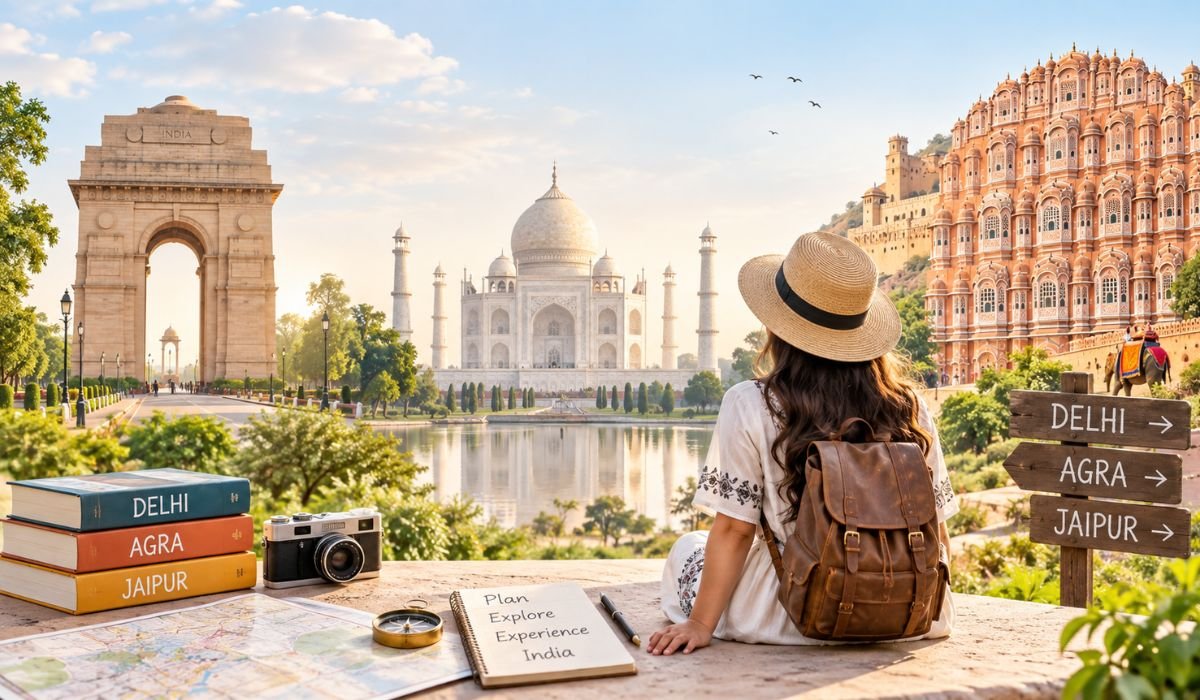
Planning a trip to India can feel overwhelming before you’ve even booked a flight. There are multiple destinations to choose from, different transportation options to compare, hotel decisions to make, monument timings to check, and questions about weather, food, currency, safety, and visas to work through. It’s a lot to think about at once, and that’s exactly why so many first-time travelers end up with itineraries that are either rushed or unrealistic.
The good news is that a stress-free India tour isn’t about seeing everything. It’s about building a realistic itinerary with enough travel time, enough rest, and enough flexibility to actually enjoy the trip you’re on. For most first-time and international visitors, that starts with a manageable circuit like Delhi, Agra, and Jaipur, which brings together major historical and cultural attractions without requiring constant long-distance travel between cities.
This guide walks through how to plan a stress-free India tour step by step, from choosing destinations and transportation to packing, timing, and what to expect once you’re on the ground.
1. Decide What Kind of India Experience You Want
Before looking at maps or itineraries, it helps to identify what you actually want out of the trip. India offers very different experiences depending on your interests, and trying to combine too many of them into one visit is one of the fastest ways to end up with a packed, tiring schedule.
Consider which of these matter most to you:
- History and architecture
- Culture and local experiences
- Food
- Wildlife
- Luxury travel
- Photography
- Shopping
- Spiritual experiences
- Family travel
- Romantic travel
Choosing two or three priorities, rather than trying to fit in all of them, makes it much easier to build a focused itinerary instead of an overloaded one.
2. Choose the Right Destinations
India is a large and diverse country, and no single trip can realistically cover all of it. Rather than trying to see the whole country in one visit, it’s more practical to choose one region and explore it properly.
Why the Golden Triangle Is Good for First-Time Visitors
The Delhi–Agra–Jaipur route, often called the Golden Triangle, is a popular starting point for a reason: it packs a lot of history and culture into a relatively compact circuit.
Delhi offers a mix of historic monuments, the narrow lanes of Old Delhi, India Gate, the Red Fort, and busy local markets.
Agra is home to the Taj Mahal and Agra Fort, along with a strong sense of Mughal-era heritage.
Jaipur, known as the Pink City, brings you Amber Fort, City Palace, Hawa Mahal, and a taste of Rajasthani culture and shopping.
Because these three cities are relatively close to one another, they work well for travelers who want a meaningful introduction to India without excessive travel time between stops. If you’d like to see how these destinations come together, the Golden Triangle Tour India page outlines private, customizable options for exploring this route.
3. Choose the Right Number of Days
One of the biggest causes of travel stress is trying to fit too much into too few days. Before you commit to a itinerary, it’s worth thinking honestly about how much time you actually have and how you want to spend it.
| Trip Duration | Best For | Suggested Pace |
| 3 Days | Short vacation | Fast-paced |
| 4 Days | First-time visitors | Balanced |
| 5 Days | Comfortable sightseeing | Relaxed |
| 7 Days | More exploration | Leisurely |
How many days do you need for a stress-free Golden Triangle tour?
For most first-time visitors, 4–5 days provides a practical balance between sightseeing and travel. Three days works for a short, fast-paced trip, while 5–7 days allows more flexibility and additional experiences.
If your schedule is tight, a Golden Triangle Tour 3 Days itinerary can work well, though it does mean a faster pace. Travelers looking for a bit more breathing room between sightseeing and travel often If you’d rather slow things down and add extra time at each stop, a Golden Triangle Tour 5 Days itinerary allows for a more relaxed pace.
4. Don’t Pack Too Many Places Into One Trip
There’s a natural temptation to add “just one more city” to an itinerary, but doing so often works against the goal of a stress-free trip. Adding too many destinations tends to lead to:
- Long travel days
- Frequent hotel check-ins and check-outs
- Less actual sightseeing time
- More fatigue
- Less time for local experiences
Slow travel, where you spend more time in fewer places, generally results in a more enjoyable trip than rushing between cities. Leaving some flexibility in your schedule rather than locking in a rigid, back-to-back itinerary makes a noticeable difference in how relaxed the trip actually feels.
5. Plan Your Transportation in Advance
Transportation is one of the areas where advance planning pays off the most. Common options for getting around include:
- Private car
- Train
- Domestic flights
- Airport transfers
- Local transportation within cities
Having transportation arranged in advance between major destinations removes a significant amount of day-to-day uncertainty. For Golden Triangle travelers specifically, private road travel is often convenient because the itinerary can be adjusted around sightseeing and hotel schedules rather than fixed departure times. Tours in this region commonly include private transportation with a professional driver, which allows the pace of each day to be adjusted as needed.
6. Book Hotels in Convenient Locations
When comparing hotels, it’s worth remembering that the cheapest option isn’t always the best one, especially if it adds significant travel time to your day.
Things worth considering include:
- Location relative to attractions
- Cleanliness
- Reviews
- Accessibility
- Breakfast options
- Air conditioning
- Family requirements
- Proximity to attractions
Practical tip: Choose convenience over saving a small amount of money when the difference significantly affects your travel time each day.
7. Plan Your Sightseeing Around Opening Times
It’s tempting to build an itinerary from a simple list of attractions, but a more useful approach is to plan around each site’s actual opening times and conditions. Before visiting, check:
- Opening days
- Opening hours
- Ticket requirements
- Expected crowds
- Best photography times
- Travel time between attractions
The Taj Mahal is a good example of why this matters. It’s closed on Fridays, and morning visits are generally quieter and cooler than afternoon ones. Rules, hours, and closures for monuments across India can change, so it’s worth verifying current information before your visit rather than relying on outdated sources.
8. Leave Time for Rest
This is one of the most important, and most overlooked, parts of building a stress-free itinerary. A good schedule should include:
- Breakfast without rushing
- Reasonable hotel check-in time
- Afternoon breaks
- Free evenings
- Flexible sightseeing blocks
- Recovery time after long drives
A good travel itinerary shouldn’t feel like a checklist you’re racing to complete. Building in downtime isn’t wasted time; it’s what keeps the rest of the trip enjoyable.
9. Travel During the Right Season
India’s climate varies considerably by region, so it helps to think about timing in terms of your specific destinations rather than the country as a whole.
For the Golden Triangle region specifically:
October–March: Generally comfortable conditions for sightseeing, with cooler temperatures.
April–June: Hotter conditions, especially during the daytime, which can affect how much walking and outdoor sightseeing feels comfortable.
July–September: Monsoon season, when rain can affect travel plans and outdoor activities.
These aren’t absolute rules, and the right time to travel depends on your personal weather tolerance, destination, and priorities.
10. Prepare Your Documents Before You Travel
Getting your paperwork sorted before departure removes one of the most common sources of last-minute travel stress. Make sure you have:
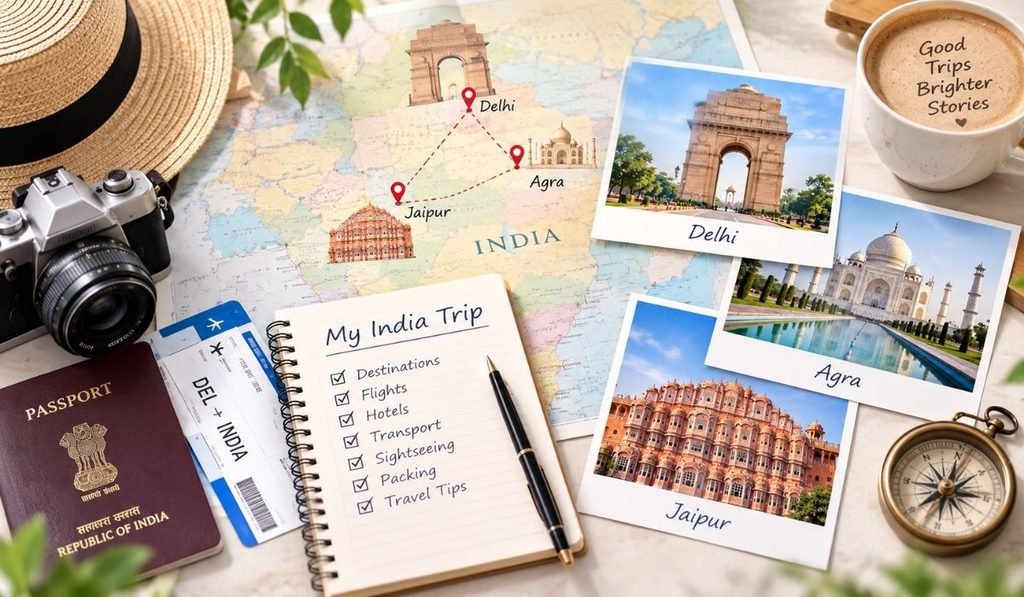
- Passport
- Visa or e-Visa, where applicable
- Travel insurance
- Hotel confirmations
- Transportation details
- Emergency contacts
- Digital copies of important documents
It’s a good habit to keep both digital and offline copies of your key documents, since visa rules and entry requirements can change and should be verified through current official sources before you travel.
11. Pack for Comfort, Not Just Style
A practical packing list can save you a lot of discomfort once you’re out sightseeing all day. Consider packing:
- Comfortable walking shoes
- Lightweight clothing
- Weather-appropriate layers
- Sun protection
- A reusable water bottle
- Personal medication
- A power adapter
- A small day bag
- Copies of important documents
Comfortable shoes deserve special mention here. Forts, palaces, markets, and monuments across the Golden Triangle involve a fair amount of walking, often on uneven stone surfaces, so footwear matters more than most people expect.
12. Make Food and Hydration Easy
India’s food scene is one of the highlights of any trip, and a few simple precautions can help you enjoy it without unnecessary worry:
- Choose reputable restaurants
- Drink safe or treated water
- Be cautious with unfamiliar street food initially, then explore gradually
- Carry basic snacks for long travel days
- Stay hydrated, especially in warmer months
- Let your system adjust gradually to local cuisine
None of this should discourage you from trying local food. It’s simply about pacing yourself, especially in the first day or two.
13. Plan for Local Culture and Etiquette
A little cultural awareness goes a long way toward making your trip smoother and more enjoyable:
- Dress modestly when visiting religious places
- Ask before photographing people
- Respect local customs
- Remove shoes where required
- Be patient in busy or crowded areas
- Learn a few basic local greetings
This is less about avoiding mistakes and more about traveling with confidence and respect, which tends to lead to warmer interactions along the way.
14. Keep Your Itinerary Flexible
Even the best-planned trip can run into unexpected delays, whether it’s traffic, weather, or simply wanting more time at a place you loved. Build in flexibility by:
- Avoiding a schedule that’s booked hour by hour
- Keeping buffer time between major activities
- Not booking tightly connected transport unless necessary
- Leaving at least one evening open
- Having a backup activity in mind
This is really the core idea behind the whole guide: planning should reduce stress, not add to it.
15. Consider a Private Tour for a More Seamless Experience
If you’ve read this far, you’ve probably noticed that a lot of stress-free trip planning comes down to logistics: transportation, drivers, local guides, sightseeing sequencing, hotel coordination, route planning, and having someone to turn to if something goes wrong.
A private tour doesn’t make all of this disappear, but having those logistics coordinated by an experienced local operator can reduce the number of individual arrangements you need to manage yourself. Instead of separately booking transport, researching each monument’s opening hours, and arranging a guide at each stop, a private itinerary brings these pieces together in a way that’s built around your pace.
16. Choose an Itinerary That Matches Your Travel Style
There isn’t one “correct” way to do the Golden Triangle. The right itinerary depends on how much time you have and what you’re most interested in.
| Traveler Type | Recommended Approach |
| First-time visitor | 4–5 day Golden Triangle |
| Short vacation | 3-day Golden Triangle |
| Relaxed traveler | 5–7 days |
| Wildlife lover | Golden Triangle with Ranthambore |
| Spiritual traveler | Golden Triangle with Varanasi |
| Wellness-focused traveler | Golden Triangle with Rishikesh |
If wildlife is a priority, a Golden Triangle Tour with Ranthambore itinerary adds a tiger reserve safari to the classic circuit. Travelers who want to extend their trip with a spiritual dimension often look at a Golden Triangle Tour with Varanasi, which adds one of India’s oldest and most culturally significant cities to the route. And for those who’d like to end the trip on a slower, wellness-focused note, a Golden Triangle Tour with Rishikesh combines the historical circuit with the Himalayan foothills.
17. Common India Travel Planning Mistakes to Avoid
- Trying to cover too many cities in one trip
- Underestimating travel time between destinations
- Booking hotels based only on price
- Not checking monument closures in advance
- Creating an overly packed daily itinerary
- Forgetting to build in rest days
- Leaving transportation arrangements until the last minute
- Ignoring seasonal weather patterns
- Not keeping copies of travel documents
- Not leaving buffer time between activities
Frequently Asked Questions
How can I plan a stress-free trip to India?
Focus on choosing fewer destinations rather than more, build in realistic travel time between them, book accommodation and transport in advance, and leave enough flexibility in your schedule to handle the unexpected.
How many days are enough for a first India trip?
It depends on the region you’re visiting, but for a focused Golden Triangle itinerary, 4–7 days generally works well for a first-time visit.
Is the Golden Triangle good for first-time visitors to India?
Yes. Delhi, Agra, and Jaipur provide a compact introduction to India’s history, architecture, and culture without requiring extensive travel between destinations.
What is the best way to travel between Delhi, Agra, and Jaipur?
Private car travel offers flexibility around your sightseeing schedule, while trains can be a faster option between specific city pairs. The right choice depends on your itinerary and how much flexibility you want.
What should I pack for an India tour?
Comfortable walking shoes, lightweight and weather-appropriate clothing, sun protection, a reusable water bottle, personal medication, a power adapter, and copies of your important documents.
What is the best time to visit India’s Golden Triangle?
October to March generally offers the most comfortable conditions for sightseeing, though the right time ultimately depends on your personal weather tolerance and travel priorities.
Is a private India tour easier than planning everything independently?
A private tour can simplify coordination by handling transportation, guides, and itinerary planning on your behalf, which reduces the number of individual arrangements you need to manage. This doesn’t mean independent travel is inherently difficult, just that it typically requires more of your own planning.
Can I customize a Golden Triangle itinerary?
Yes. Customized itineraries are common for travelers with different trip durations, interests, hotel preferences, or travel styles, and many operators, including India Golden Triangle Tours, build their private itineraries around this kind of flexibility.
Final Thoughts
A stress-free India trip really comes down to a few core ideas: choosing the right destinations for your interests, allowing enough time between activities, arranging transportation properly, preparing your documents in advance, and leaving room for flexibility along the way. None of this requires seeing everything or moving at a breakneck pace, it just requires realistic planning.
Ready to plan your India adventure? Explore the customizable Golden Triangle Tour options from India Golden Triangle Tours and choose an itinerary that fits your time, interests, and travel style.