


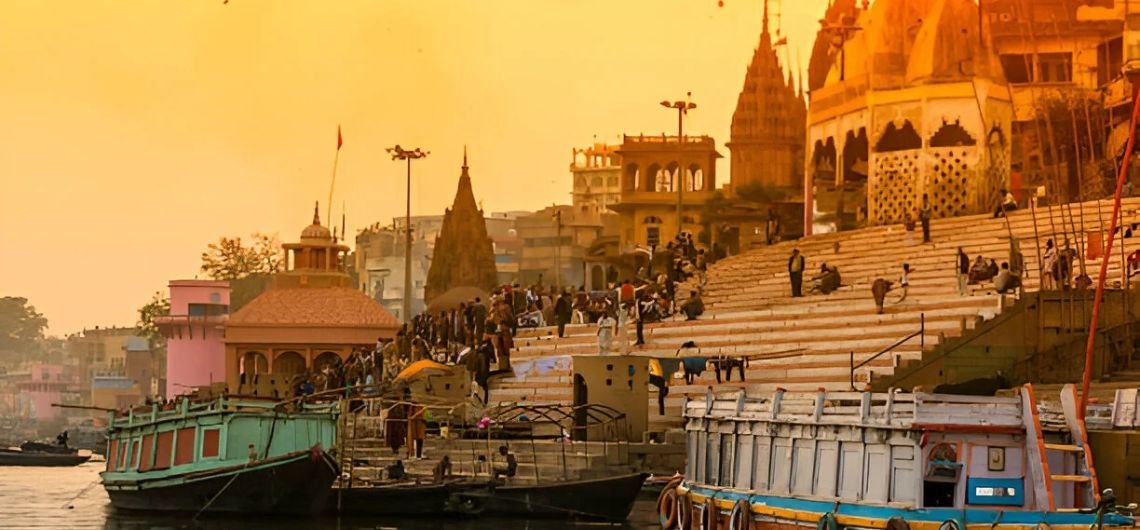
Varanasi is one of the oldest continuously inhabited cities in the world, and few experiences introduce it as well as a Varanasi morning boat ride. Before the lanes fill with traffic and the temple bells reach full volume, you drift along the Ganges while the city slowly wakes up on the western bank.
Seen from the water, the ghats stop being a confusing jumble of steps, shrines and crowds. They become a single, continuous riverfront, and you can finally take it in. This guide explains what happens on the ride, what you will see, and how to prepare, so your first morning on the Ganges feels calm rather than rushed.
Why Is a Morning Boat Ride in Varanasi So Special?
For millions of Hindus, the Ganga is a sacred river, and Varanasi is one of its most significant places. Mornings on the riverfront are when that devotion is most visible, and it is the main reason travellers plan their day around dawn, whether Varanasi is a standalone stop or part of a Golden Triangle Tour with Varanasi.
Three things make the early hours different from any other time of day:
- The contrast. The river is quiet and the light is soft, while the ghats gradually fill with people arriving to bathe, pray and begin their day.
- The layers. Architecture, ritual and ordinary life share the same stretch of riverbank. Palaces and temples rise behind people doing laundry, stretching, praying or chatting.
- The light. Sunrise warms the stone of the ghats and gives the whole skyline a glow that midday never matches.
You are a quiet observer rather than a participant, and that distance is part of the appeal.
What Time Does the Varanasi Morning Boat Ride Start?
Most morning rides leave shortly before sunrise so that you are already on the water when the sky begins to lighten. Because sunrise shifts through the year, there is no single departure time that suits every season. Winter sunrises come noticeably later than summer ones, so your hotel or boat operator is the best source for the right time on the day you travel.
A few practical points:
- Arrive early. Aim to be at the ghat before your agreed time. Boats are easier to board in the dim light when you are not hurrying, and you will not miss the first colours.
- Shared or private. Visitors can usually arrange either a shared boat or a private one. A private boat gives more flexibility to linger or stop, and a shared boat can be a simpler option for solo travellers. Confirm which you are booking.
- Arrange it in advance. Your hotel, a licensed local guide or a trusted tour operator can organise a boat the evening before, which removes the pressure of negotiating in the dark.
What Will You See During the Boat Ride?
Routes vary, but most rides pass a series of well-known ghats and riverside landmarks. Here is what typically stands out.
Assi Ghat
Assi Ghat sits at the southern end of the main riverfront and is often where rides begin. In the morning you may see people practising yoga, offering prayers or gathering for devotional activity. It tends to feel relaxed and social.
Dashashwamedh Ghat
Dashashwamedh is among the best-known and most historically important ghats in Varanasi. It is lively at almost any hour, with priests, pilgrims, boatmen and visitors all sharing the steps. From the river, you can appreciate how central it is to the riverfront.
Manikarnika Ghat
Manikarnika is one of the ghats where Hindu cremations take place, and it holds deep significance in Hindu belief as a place of final passage. Boats pass at a respectful distance. Treat it as a place of mourning rather than a spectacle: keep voices low and never photograph the pyres or the mourners.
Temples and riverside buildings
Between the ghats you will see temples, shrines and old palaces and havelis built by patrons from across India over the centuries. Many are best appreciated from the water, where you can take in their full height.
Daily life along the river
Expect to see people bathing, offering water to the sun, chanting, washing clothes and starting their day. These are personal religious and everyday acts. Watch with courtesy and without staring.
The Sunrise Experience: Watching Varanasi Wake Up
The sky usually begins as soft grey and blue, then shifts through pinks, oranges and gold as the sun rises over the eastern bank, which is low and open. That unobstructed horizon is one reason the view from the river is so striking.
As the light strengthens, it picks out the carved stone, painted walls and domes along the western riverfront. The skyline seems to brighten one section at a time.
The soundscape matters as much as the sight. You may hear temple bells, chanting, snippets of devotional music and the steady dip of oars. Conversations on the steps carry across the water. For many visitors this combination of light and sound is what stays with them longest, more than any individual landmark.
Understanding the Spiritual and Cultural Traditions Along the Ganges
In Hindu tradition, the Ganga is revered as a goddess as well as a river, and bathing in her waters is associated with purification. Varanasi, also known as Kashi, is considered especially sacred, which is why pilgrims travel here from across India.
You may hear about Subah-e-Banaras, a morning cultural programme held at Assi Ghat that brings together music, chanting and prayer at dawn. Details such as timing and format can change, so ask your hotel or guide whether it is being held during your visit. Separately, the well-known Ganga Aarti is an evening ceremony, most famously at Dashashwamedh Ghat, and is a different experience from the morning ride.
A few ideas that help international visitors approach the river respectfully:
- Rituals here are sincere acts of faith, not performances.
- Daily life and devotion are intertwined: the same steps used for prayer are used for conversation, exercise and work.
- Curiosity is welcome, but sensitivity matters most, especially around bathing and cremation.
How Long Does a Varanasi Boat Ride Take?
Duration depends on the route, the boat and the river conditions on the day. Many visitors find that a ride of roughly one to two hours covers the main ghats at an unhurried pace, but this is a general guide rather than a fixed rule.
- Shorter rides typically cover a central stretch, such as the area around Dashashwamedh, and suit travellers short on time.
- Longer rides cover more of the riverfront between the southern and northern ghats and leave more time to watch and photograph.
Because itineraries vary by operator, confirm the route, the starting and ending points and the expected duration before you set off. River levels and weather can also affect what is possible.
Best Time of Year for a Sunrise Boat Ride in Varanasi
You can take a boat ride in different seasons, but conditions differ noticeably.
- Winter (roughly November to February). This is the most comfortable time for many visitors, with cooler air that makes a long morning on the water pleasant. Mornings can be chilly, and fog or haze may soften or limit visibility on some days.
- Summer (roughly April to June). Mornings are the best part of the day because it gets very hot later. Starting early is strongly recommended.
- Monsoon (roughly July to September). The Ganges rises, some ghats may be partly submerged, and boat services can be restricted or altered. Check conditions locally before you plan around a ride.
Whatever the season, check the weather forecast and confirm boat availability the day before you travel.
Winter also overlaps with the most popular season for exploring North India’s famous cities. If you are planning a longer trip, our overview of Golden Triangle Tour Packages in India can help you see how the season shapes a wider itinerary.
Practical Tips for First-Time Visitors
A little preparation makes the ride smoother.
- Choose a licensed, reliable operator. Ask your hotel or a reputable guide to recommend one rather than accepting offers from strangers at the ghat.
- Agree the price and duration beforehand. Confirm what is included, the route and whether the boat is shared or private, so there are no surprises later.
- Dress for the weather. Carry a light jacket or shawl in winter, since the air near the water can feel colder than expected.
- Wear comfortable clothing and shoes. You will walk down steps to the boat, and the stone can be slippery. Modest clothing is also respectful near religious activity.
- Secure your belongings. Keep your phone and camera on a strap or in a bag so nothing ends up in the river.
- Follow the boatman’s instructions. Stay seated, avoid sudden movements and board and exit carefully.
- Respect local customs. Keep your voice low, avoid pointing at people bathing or praying, and never touch offerings.
Photography Tips: Capturing Varanasi from the Ganges
The soft, low light at dawn makes for some of the best travel photographs you will take in India.
- Photograph the sunrise and the skyline. Wide shots of the ghats lit by early light capture the scale of the riverfront.
- Look for details. Boats, carved stonework, flags and the textures of old buildings make good frames.
- Capture daily life with care. Candid scenes can be powerful, but use a longer lens from a distance rather than getting close.
- Ask permission. Where you want a portrait of a person, ask first, and accept a refusal gracefully.
- Keep sensitive places off-limits. Do not photograph cremations or mourners.
- Protect your gear. Early mornings can be damp, so carry a soft cloth and keep equipment on a strap.
Exploring Varanasi as Part of a Longer India Journey
Varanasi offers a different side of India from the grand monuments of the north-west. Where Delhi, Agra and Jaipur showcase Mughal and Rajput history, Varanasi shows living spiritual tradition, which is why many visitors add it to a wider journey.
A common approach is to explore Delhi, Agra and Jaipur first, then fly or take a train east to Varanasi for a few days on the Ganges. Planning the order and transport in advance saves time and avoids rushed transfers, which matters when your morning boat ride depends on an early start.
If you want these cities in a single trip, a ready-made route is one way to combine them, so that history, architecture and spirituality sit within one itinerary.
Is a Varanasi Morning Boat Ride Worth Experiencing?
For most visitors, yes. A Varanasi morning boat ride brings together soft sunrise light, centuries of architecture, daily ritual and the sounds of the river in a single experience. It does not demand much effort, and it explains the city in a way that walking its lanes alone cannot.
It particularly suits:
- First-time visitors who want a gentle introduction to Varanasi.
- Photographers who value early light and layered scenes.
- Cultural travellers who want to understand how faith and daily life intertwine.
Go with respect, patience and an early alarm, and the Ganges at sunrise is likely to be among the most memorable moments of your trip.
Frequently Asked Questions
What is the best time for a morning boat ride in Varanasi?
Shortly before sunrise is the most popular time, so you are on the water as the sky brightens. Sunrise time changes through the year, so confirm the departure time with your hotel or boat operator.
How long does a Varanasi sunrise boat ride take?
Many rides last roughly one to two hours, depending on the route, the boat and river conditions. Confirm the route and duration with your operator beforehand.
Which ghats can visitors see during a boat ride?
Typical routes include Assi Ghat, Dashashwamedh Ghat and Manikarnika Ghat, along with many temples and historic riverside buildings. The exact stretch depends on the route you choose.
Is a private boat available in Varanasi?
Yes, visitors can generally arrange either a private boat or a shared one. Ask your hotel, guide or tour operator, and confirm the details in advance.
Can visitors enjoy a sunrise boat ride throughout the year?
Rides are possible in many seasons, but conditions vary. Winter is the most comfortable, summer mornings are best taken early, and monsoon river conditions can limit or change services, so check locally.
What should I wear for a morning boat ride in Varanasi?
Wear comfortable, modest clothing and sturdy shoes with good grip. In winter, add a light jacket or shawl because the air near the water can be cold.
Is a morning boat ride suitable for first-time visitors?
Yes. It is a calm, scenic way to see the ghats and understand the city’s layout. Follow the boatman’s instructions and be respectful around rituals.