


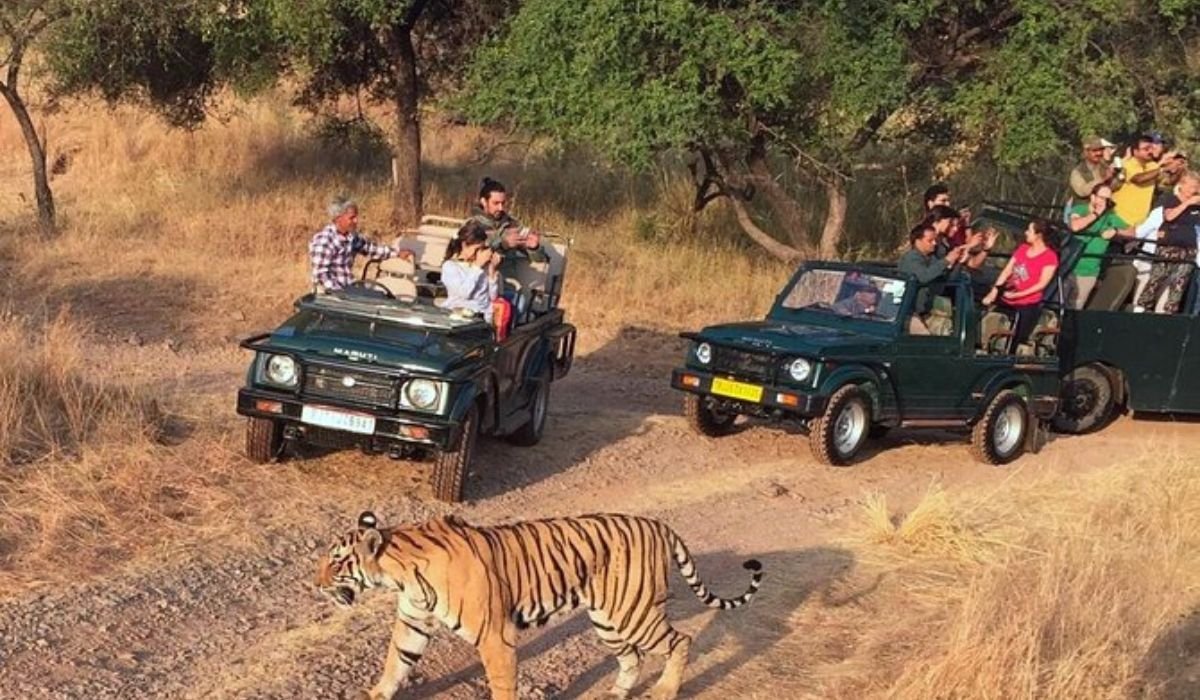
A wildlife safari with children can turn a regular holiday into a lasting family memory. Watching a spotted deer graze at sunrise, hearing a peacock call across a lake or following a naturalist’s gaze into the trees teaches kids more about nature than any textbook. India’s national parks make this possible, offering forests, grasslands and lakes that are home to tigers, leopards, deer, crocodiles and hundreds of bird species.
But a jungle safari is not like a theme park ride. It means early mornings, long quiet stretches and unpredictable wildlife. Good preparation helps children stay comfortable, safe and curious, and it helps parents relax and enjoy the experience too. Ranthambore National Park in Rajasthan is a popular place for families to try this for the first time, and our Ranthambore safari booking guide explains how bookings, vehicle options and timings work before you finalise your dates.
Is a Wildlife Safari Suitable for Children?
For most families, yes, provided the safari is planned around the child. A safari is a living classroom. Children learn how forest ecosystems work, how predators and prey share a habitat and why protecting wildlife matters. It also builds patience, observation skills and a sense of wonder.
That said, every child is different. A toddler who cannot sit still for long may find a two- to three-hour drive tiring, while an eight-year-old who loves animals may be thrilled. Think honestly about your child’s age, attention span, comfort with early starts and ability to stay calm in a moving vehicle.
Parks also have their own rules about who can enter, what vehicles are used and what is allowed on board. Always check the park’s current age restrictions and safari regulations through official sources or a trusted tour operator before you book. Do not rely on old blog posts or hearsay.
Choose the Right Wildlife Destination for a Family Safari
Not every national park suits every family. Travel time, weather, accommodation quality and how easy it is to reach the park all affect how a child experiences the trip.
Ranthambore National Park is a strong option for family wildlife safari in India. It sits in eastern Rajasthan and is known for its dry deciduous forest, rocky hills, lakes and the ruins of an old fort inside the park. Besides tigers, visitors can look for sambar and spotted deer, langurs, wild boar, crocodiles and many birds. The scenery gives children plenty to look at even when big cats stay hidden, which matters for a family tiger safari.
Ranthambore also fits well into a Rajasthan itinerary because it is reachable from Jaipur and from the Delhi–Agra route, so you can avoid very long transfers. Weather matters too: summer afternoons can be hot, winter mornings can be cold, and the park typically closes for part of the monsoon. Confirm the current season and dates before choosing your travel window.
Before finalising your trip, make sure you understand the safari booking procedure, vehicle options, timings and entry requirements, so you know how permits and seats work before you commit to dates.
Prepare Your Children Before the Safari
The best preparation starts at home, a week or two before you travel.
- Introduce the animals. Look at picture books, wildlife documentaries and photos of tigers, deer, langurs, owls and peacocks together. Children who recognise an animal are far more excited to spot it.
- Explain the jungle rules. Tell them in simple words that they must stay seated, speak softly and listen to the guide.
- Practise being quiet. Try a “silent spotting” game at a park or garden, where the child earns points for noticing birds without talking loudly.
- Set honest expectations. Explain that tigers are wild and shy, and that seeing one is a bonus, not a promise. Say it before the trip so there is no disappointment.
- Spark curiosity about small things. Encourage them to notice birds, trees, insects, pugmarks and termite mounds. Often these become the highlights.
What Should You Pack for a Wildlife Safari With Children?
Packing light but smart makes the morning smoother. Here is a practical checklist:
- Comfortable, seasonal clothing
- A light jacket or sweater for cold mornings
- Hats or caps
- Sunscreen
- Reusable water bottles
- Child-friendly snacks, where permitted
- Binoculars (a kid-sized pair is ideal)
- A camera
- Personal medication and a basic first-aid kit
- Wet wipes and tissues
- A small backpack the child can carry
- Required identification and booking documents
Rules on food, bags and other items differ from park to park and can change. Ask your operator or check the park’s official guidance on what is allowed inside the safari vehicle and the gate area before you pack.
Choose Comfortable Clothing and Footwear
Open safari vehicles expose children to wind, dust and sun, so dress them for comfort.
- Breathable fabrics. Cotton or light synthetic blends work well. Avoid stiff or scratchy materials.
- Neutral colours. Shades like beige, olive, khaki and brown are popular because they blend with the surroundings and do not show dust. This is a common suggestion, not an official park rule unless the park says otherwise.
- Closed, comfortable shoes. Choose sturdy sneakers or light trekking shoes with good grip. Sandals are not ideal for dusty gates and uneven ground.
- Layers. Winter mornings in Rajasthan can be surprisingly cold in an open vehicle. Dress children in a base layer, a sweater and a windproof jacket, and let them remove layers as the day warms. Keep a scarf or light blanket handy.
Understand Safari Timings and Plan Around Children’s Routine
Most parks run morning and afternoon safari slots, and the exact timings change with the season. Always confirm the current schedule with the park or your operator.
Morning safaris usually mean waking up in the dark, which can be hard for children. The air is cool and animals are often active, but the day starts early. Afternoon safaris allow a slower morning and a proper breakfast, though the weather may be warmer depending on the season.
To keep everyone happy:
- Put children to bed early the night before.
- Feed them a proper meal before leaving, even if it is small.
- Avoid scheduling a long road journey on the same day as a safari.
- Choose the slot that matches your child’s routine. A child who is cranky without sleep may enjoy the afternoon slot more. An early riser may love the morning one.
A rested child will notice far more wildlife than a tired one.
Important Wildlife Safari Safety Tips for Children
Safety on a safari is mostly about discipline and supervision. Explain these points before you board:
- Always follow the instructions of the naturalist and driver.
- Stay seated inside the safari vehicle at all times.
- Never shout or make loud noises.
- Never feed, call or approach wild animals.
- Do not throw anything, including wrappers or fruit peels, into the forest.
- Supervise children throughout the safari and keep a hand near younger ones when the vehicle moves over bumpy tracks.
- Follow every official park regulation, even if it seems strict.
Remember that the guide knows the forest and the animals’ behaviour. If the guide asks the group to stay quiet or move on, everyone should follow without argument.
How to Keep Children Interested During a Jungle Safari
Even the best safari has quiet stretches. A little structure keeps young minds engaged.
- Make it a spotting game. Give each child a simple list: a peacock, a deer, a langur, a crocodile, a kingfisher. They can tick items off as they spot them.
- Look beyond the big cat. Encourage kids to watch birds, animal tracks, trees and the landscape itself.
- Use binoculars. Show them how to hold and focus them gently.
- Welcome their questions. Guides usually enjoy sharing facts, and children often remember what they ask for themselves.
- Do not promise a sighting. Say “let’s see what the forest shows us today.” This keeps the mood positive whatever happens.
- Value the whole experience. The sunrise, the fresh air and the sounds of the forest are part of the adventure.
How to Plan a Family Wildlife Safari Along With the Golden Triangle
Many families pair a safari with India’s classic circuit of Delhi, Agra and Jaipur. Ranthambore fits naturally between these cities, so you can see the Taj Mahal, the forts and palaces of Jaipur and the wilderness of Ranthambore in one trip. A Golden Triangle Tour with Ranthambore is a convenient way to bring these together in a single, well-paced itinerary.
When planning with children, a few principles help:
- Allow enough days. Distances between cities are manageable, but they add up. Build in at least one slow day for rest.
- Do not rush. A balanced itinerary beats a packed one. Children enjoy two or three experiences each day far more than six.
- Think about transport. A private vehicle with a driver lets you stop for breaks, adjust timings and avoid crowded public transport with tired kids.
- Place the safari wisely. Schedule it after a rest day if possible, not straight after a long drive.
Our team can suggest family-friendly versions of this route, with comfortable hotels and realistic daily plans.
Common Mistakes Parents Should Avoid
- Overpacking. Heavy bags are hard to manage and may not be allowed in the vehicle.
- Choosing unsuitable safari timings. Match the slot to your child’s energy.
- Ignoring sleep schedules. An overtired child struggles to enjoy anything.
- Expecting guaranteed tiger sightings. Wildlife is never on a schedule.
- Ignoring the weather. Cold mornings, strong sun and dust all need planning.
- Overloading the itinerary. Too many cities in too few days leaves everyone exhausted.
- Not explaining the rules beforehand. Children behave better when they know why the rules exist.
Frequently Asked Questions
Is a wildlife safari safe for children?
It can be, when families follow the park’s rules and the guide’s instructions, keep children seated and supervised and avoid any contact with animals. Safety depends largely on preparation and discipline. Check current official guidelines before you travel.
What is the best age for children to experience a jungle safari?
There is no single ideal age. It depends on the child’s patience, comfort with early starts and ability to follow instructions. Many families find that children who can sit calmly for a couple of hours and enjoy animals do best. Parks may set their own age rules, so confirm them before booking.
Can children go on a Ranthambore tiger safari?
Families do take children on safaris at Ranthambore. Because rules and entry conditions can change, always confirm the current regulations with the park authorities or your tour operator before booking. No sighting is guaranteed.
What should children wear on a wildlife safari?
Breathable, weather-appropriate clothes in neutral colours, closed comfortable shoes, a cap and layers for cold mornings. Keep sunscreen handy and carry a light jacket or blanket in winter.
Are morning or evening safaris better for families?
Neither is always better. Morning safaris are cooler but need early wake-ups, while afternoon safaris allow a more relaxed start. Choose the one that fits your child’s routine and the season.
How can parents keep children entertained during a wildlife safari?
Turn it into a game with a spotting list, give them binoculars, encourage questions to the guide and invite them to notice birds, tracks and trees. Avoid promising specific animals.
Final Tips for an Enjoyable Wildlife Safari With Children
A successful wildlife safari with children comes down to five things: preparation, safety, patience, comfort and respect for nature. Get children excited with stories and pictures, pack sensibly, dress for the weather and plan your days so nobody is exhausted. Follow the guide and the park rules, and keep expectations realistic.
Above all, treat every sighting, big or small, as a gift. When children learn to love the forest for its birds, trees and quiet moments, the experience stays with them long after the trip ends, and it teaches them to value responsible wildlife tourism.