


India is home to some of the world’s most incredible wildlife destinations, but few places capture the imagination of travelers quite like Ranthambore National Park. Located in the Sawai Madhopur district of Rajasthan, this iconic tiger reserve offers an unforgettable opportunity to witness the majestic Royal Bengal Tiger in its natural habitat. With its rugged landscapes, ancient ruins, picturesque lakes, and rich biodiversity, Ranthambore has become one of the most sought-after wildlife destinations in India. If you’re planning your first tiger safari, understanding the Ranthambore Safari Booking Guide is essential. From choosing the right safari vehicle and selecting the best safari zone to knowing when and how to book, a little preparation can significantly enhance your overall experience. Since safari permits are limited and demand is especially high during the peak tourist season, advance booking is highly recommended.
Many travelers make common mistakes such as booking too late, choosing unsuitable safari timings, or misunderstanding how safari zones are allocated. This guide is designed to help you avoid those pitfalls by providing accurate, practical, and up-to-date information on the booking process, safari options, pricing, timings, and expert tips to maximize your chances of spotting wildlife.
Whether you’re a wildlife enthusiast, photographer, solo traveler, family, or an international visitor exploring India, this guide will help you confidently plan your Ranthambore adventure. If you’re also visiting Delhi, Agra, and Jaipur, we’ll explain why adding Ranthambore to your Golden Triangle itinerary creates one of India’s most rewarding travel experiences.
Why Visit Ranthambore National Park?
Ranthambore National Park is widely regarded as one of the best places in India to observe Bengal Tigers in the wild. Unlike many dense forests where wildlife remains hidden, Ranthambore’s open grasslands, rocky hills, lakes, and dry deciduous forests offer comparatively better visibility for wildlife sightings.
Originally established as the hunting grounds of the Maharajas of Jaipur, the area later became a protected wildlife sanctuary and is now one of India’s premier tiger reserves under Project Tiger. Today, conservation efforts have helped maintain a healthy tiger population while protecting hundreds of other species of animals and birds.
Home of the Royal Bengal Tiger
The biggest attraction of Ranthambore is undoubtedly the Royal Bengal Tiger. Every year, wildlife lovers and photographers from around the world visit the park hoping to witness these magnificent predators roaming freely in their natural environment.
Although tiger sightings are never guaranteed, Ranthambore has earned an excellent reputation due to frequent sightings across several safari zones.
Rich Wildlife Diversity
Beyond tigers, the park is home to an impressive variety of wildlife, including:
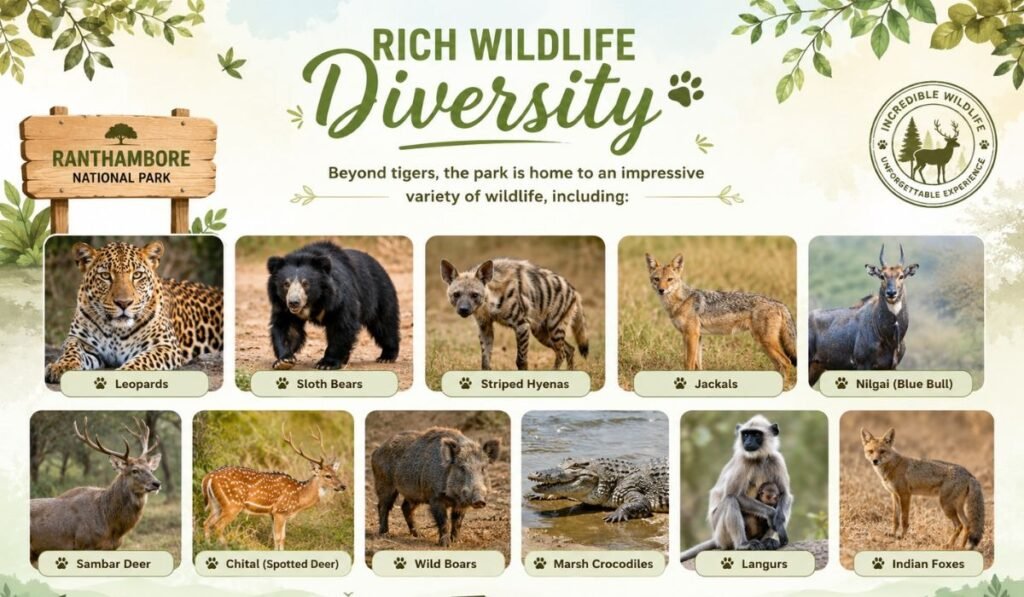
- Leopards
- Sloth Bears
- Striped Hyenas
- Jackals
- Nilgai (Blue Bull)
- Sambar Deer
- Chital (Spotted Deer)
- Wild Boars
- Marsh Crocodiles
- Langurs
- Indian Foxes
Birdwatchers can also enjoy spotting more than 300 bird species, making Ranthambore a year-round destination for nature enthusiasts.
A Paradise for Wildlife Photography
Professional photographers and hobbyists alike are drawn to Ranthambore because of its dramatic landscapes and diverse wildlife. Early morning light, ancient banyan trees, mist-covered lakes, and historic ruins create spectacular photography opportunities.
Some of the most iconic tiger photographs in India have been captured in Ranthambore.
Historic Ranthambore Fort
The park isn’t just about wildlife. Nestled atop a hill within the forest lies the magnificent Ranthambore Fort, a UNESCO World Heritage Site. Dating back to the 10th century, the fort offers breathtaking panoramic views of the surrounding forests, lakes, and valleys.
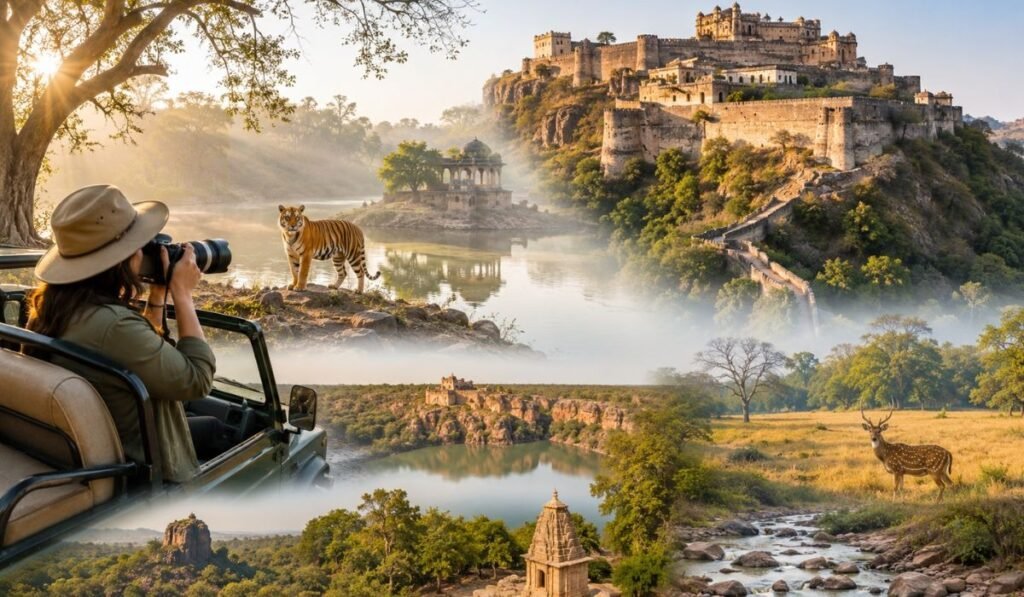
Visitors interested in history and architecture can combine wildlife exploration with cultural heritage, making Ranthambore a unique destination.
Beautiful Natural Landscapes
Ranthambore’s landscape is unlike any other national park in India. Visitors will experience:
- Rocky cliffs
- Dense forests
- Open meadows
- Scenic lakes
- Ancient temples
- Historic ruins
- Dry riverbeds
These diverse ecosystems support an incredible variety of wildlife and make every safari unique.
Types of Safari Available in Ranthambore
Choosing the right safari vehicle is one of the most important decisions you’ll make while planning your visit. Ranthambore offers two main safari options, each suited to different travel styles and budgets.
Jeep Safari
The Jeep Safari is the most popular choice among wildlife enthusiasts and photographers.
A six-seater open jeep allows visitors to explore the forest in smaller groups, offering better flexibility, unobstructed views, and easier communication with the guide. Because fewer people share the vehicle, passengers often enjoy a quieter and more immersive wildlife experience.
Advantages of Jeep Safari
- Comfortable seating
- Better visibility
- Ideal for wildlife photography
- Smaller groups
- Easier movement on forest tracks
- Personalized experience
Jeep safaris are highly recommended for couples, families, photographers, and serious wildlife lovers.
Canter Safari
A Canter Safari uses a larger open bus-like vehicle that typically accommodates around 20 visitors.
This option is generally more economical and works well for larger groups or budget-conscious travelers. While the viewing experience remains enjoyable, the larger group size can make photography and wildlife observation slightly less flexible compared to a jeep.
Advantages of Canter Safari
- Budget-friendly
- Suitable for groups
- Comfortable for family tours
- Good option during peak season
- Easy online availability
Jeep Safari vs Canter Safari
| Feature | Jeep Safari | Canter Safari |
| Seating Capacity | 6 People | Around 20 People |
| Photography | Excellent | Good |
| Comfort | High | Moderate |
| Flexibility | Excellent | Limited |
| Wildlife Viewing | Better | Good |
| Group Size | Small | Large |
| Best For | Couples, Families, Photographers | Budget Travelers, Groups |
Both safari options follow designated forest routes under the supervision of trained guides and forest officials.
Ranthambore Safari Zones Explained
One of the most frequently asked questions is, “Which safari zone should I choose?”
Understanding the safari zones helps set realistic expectations and improves your overall safari planning.
Ranthambore National Park is divided into multiple safari zones, each offering different landscapes, habitats, and wildlife viewing opportunities.
These zones are managed carefully to protect wildlife while distributing visitor traffic throughout the park.
Core Safari Zones
The core zones are considered the heart of the tiger reserve.
These areas have historically recorded frequent tiger sightings due to established tiger territories, abundant prey, and water sources.
Some core zones feature:
- Dense forests
- Water bodies
- Rocky hills
- Historic ruins
- Grasslands
Because of their popularity, permits for these zones often sell out quickly during peak tourist seasons.
Buffer Safari Zones
Buffer zones surround the core forest and play an equally important role in wildlife conservation.
These zones may offer:
- Peaceful safari experiences
- Lower tourist density
- Excellent birdwatching
- Deer sightings
- Leopard sightings
- Sloth bear encounters
In recent years, tiger movements have also increased in several buffer zones, making them attractive options for wildlife enthusiasts.
Are Some Safari Zones Better Than Others?
Every safari zone has its own unique characteristics, and wildlife movement changes constantly.
While certain zones may have historically reported more tiger sightings, there is no guarantee of spotting a tiger in any particular zone. Wild animals move freely according to their natural behavior, availability of prey, weather conditions, and water sources.
An experienced driver and knowledgeable guide often play a more important role in enhancing your safari experience than simply choosing a particular zone.
Instead of focusing solely on one famous zone, consider booking multiple safaris across different zones. This not only increases your chances of wildlife sightings but also allows you to experience the park’s diverse landscapes and ecosystems.
Many experienced wildlife photographers recommend taking at least two to four safaris during your stay to fully appreciate the richness of Ranthambore National Park.
Planning your safari carefully is the first step toward an unforgettable wildlife adventure. In the next part of this guide, you’ll learn how to book a Ranthambore safari online, understand safari prices, compare morning and evening safaris, explore seasonal timings, and discover the best time of year to visit for an exceptional wildlife experience.
How to Book Ranthambore Safari Online
Booking your safari in advance is one of the most important steps when planning a visit to Ranthambore National Park. Since the number of safari vehicles allowed inside the park is limited, permits often sell out weeks or even months ahead—especially during weekends, public holidays, and the peak tourist season.
Whether you’re traveling independently or through a tour operator, understanding the booking process will help you secure your preferred safari date and time.
Step 1: Choose Your Travel Dates
Start by deciding when you want to visit Ranthambore National Park. The park is generally open from October to June, with the busiest months being October to March due to pleasant weather.
If your travel dates are flexible, consider visiting on weekdays when there are usually fewer visitors.
Step 2: Select Your Safari Type
Visitors can choose between:
- Jeep Safari (6-seater)
- Canter Safari (20-seater)
A Jeep Safari is recommended for photographers and travelers seeking a more intimate wildlife experience, while a Canter Safari is ideal for larger groups and budget-conscious visitors.
Step 3: Choose Your Safari Timing
Two safaris operate each day:
- Morning Safari
- Evening Safari
Safari timings vary throughout the year depending on sunrise and sunset. Morning safaris generally begin shortly after sunrise, while evening safaris start in the afternoon.
Booking both a morning and an evening safari can significantly improve your chances of wildlife sightings.
Step 4: Provide Visitor Details
To issue a safari permit, visitors must submit identification details during the booking process.
Commonly accepted documents include:
- Passport (for international travelers)
- Aadhaar Card
- Driving Licence
- Voter ID
- PAN Card (where accepted)
The ID carried during the safari must match the information provided at the time of booking.
Step 5: Complete Payment
After entering the required details, complete the payment through the available online payment methods.
Once the payment is successful, you’ll receive a booking confirmation with your safari details.
It is advisable to save both digital and printed copies of your confirmation for easy verification on the day of your safari.
Step 6: Arrive Before Reporting Time
Visitors should arrive at the designated boarding point at least 30–45 minutes before departure.
Late arrivals may miss their safari, and refunds are generally not available for missed departures.
How Far in Advance Should You Book?
Because safari permits are limited, early booking is strongly recommended.
Suggested Booking Timeline
| Travel Season | Recommended Booking Time |
| October–March | 60–90 days in advance |
| April–June | 30–45 days in advance |
| Long weekends & holidays | 2–3 months in advance |
| International travelers | As soon as travel dates are confirmed |
Booking early provides a better chance of securing your preferred safari timing and vehicle.
Ranthambore Safari Prices
Safari prices vary depending on several factors, including:
- Type of vehicle
- Nationality
- Safari zone
- Government fees
- Guide charges
- Current park regulations
Because the Rajasthan Forest Department periodically revises pricing, visitors should always verify the latest rates before booking.
Factors That Influence Safari Cost
Your total safari cost may include:
- Entry permit
- Vehicle charges
- Guide fees
- Forest conservation fees
- Online booking charges (if applicable)
Private arrangements or exclusive jeep bookings may cost more than shared safaris.
Is Jeep Safari Worth the Extra Cost?
Many travelers choose Jeep Safaris despite their higher price because they offer:
- Smaller groups
- Better photography opportunities
- Quieter wildlife experience
- Improved visibility
- Greater comfort
For wildlife photographers and first-time visitors, the additional investment is often worthwhile.
Ranthambore Safari Timings
Safari timings change throughout the year based on daylight hours.
Below is a general guide.
| Season | Morning Safari | Evening Safari |
| October–February | Around 7:00 AM | Around 2:00 PM |
| March–April | Around 6:30 AM | Around 3:00 PM |
| May–June | Around 6:00 AM | Around 3:30 PM |
Note: Exact timings may vary depending on weather conditions and official park regulations.
Always check your booking confirmation for the reporting and departure times.
Best Time to Visit Ranthambore National Park
Although the park remains open for most of the year, each season offers a different wildlife experience.
October to February
Winter is considered one of the most comfortable times to visit.
Advantages
- Pleasant temperatures
- Beautiful landscapes
- Comfortable safari rides
- Excellent birdwatching
- Ideal for families
Morning safaris can be chilly, so carrying a light jacket is recommended.
March to April
As temperatures begin to rise, vegetation becomes thinner, making wildlife easier to spot.
This period offers an excellent balance between comfortable weather and good wildlife visibility.
May to June
Summer is often regarded as the best season for tiger sightings.
As natural water sources shrink, animals—including tigers—frequently visit lakes and watering holes.
Although daytime temperatures can exceed 40°C, dedicated wildlife enthusiasts often prefer this season because of the increased chances of observing animal activity.
Monsoon Season
Certain core safari zones remain closed during the monsoon due to heavy rainfall and conservation measures. However, some buffer zones may continue operating depending on weather conditions and government regulations.
Travelers planning a monsoon visit should confirm the availability of safari zones before making reservations.
Morning Safari vs Evening Safari
One of the most common questions among first-time visitors is whether they should choose a morning or evening safari.
The answer depends on your interests, photography preferences, and travel schedule.
Morning Safari
Morning safaris begin shortly after sunrise, when the forest is at its most peaceful.
Advantages
- Pleasant weather
- Fresh animal activity
- Beautiful golden light
- Excellent birdwatching
- Ideal photography conditions
Many predators remain active during the cooler morning hours, increasing opportunities to observe wildlife.
Evening Safari
Evening safaris offer a completely different atmosphere.
As temperatures begin to drop, many animals become active once again before sunset.
Advantages
- Warm evening light
- Dramatic sunset photography
- Active herbivores
- Comfortable during winter afternoons
The golden-hour lighting creates stunning opportunities for wildlife and landscape photography.
Which Safari Is Better?
Neither safari is universally better—they simply offer different experiences.
| Feature | Morning Safari | Evening Safari |
| Weather | Cooler | Warmer |
| Photography | Soft morning light | Golden sunset light |
| Bird Activity | Excellent | Good |
| Animal Activity | Very Good | Very Good |
| Summer Comfort | Better | Hotter |
If your itinerary allows, booking both a morning and an evening safari is the best way to experience the diverse landscapes and wildlife of Ranthambore National Park. Multiple safaris not only increase your chances of spotting tigers but also allow you to witness different animal behaviors throughout the day.
Best Safari Zone for Tiger Sighting
One of the most common questions travelers ask is, “Which safari zone offers the best chance of seeing a tiger?” While some zones have historically recorded more tiger sightings, it’s important to understand that wildlife sightings can never be guaranteed. Tigers roam freely across their territories, and their movements depend on prey availability, weather conditions, water sources, and natural behavior.
Rather than focusing only on one famous zone, it’s better to enjoy the safari experience as a whole. Every zone has its own landscape, ecosystem, and unique wildlife encounters.
Factors That Influence Tiger Sightings
Several factors can affect your chances of spotting a tiger:
- Season of your visit
- Time of day
- Animal movement
- Weather conditions
- Experience of the safari guide and driver
- Number of safaris you book
Travelers who book two or more safaris across different zones often enjoy a more rewarding wildlife experience than those who rely on a single safari.
Documents Required for Ranthambore Safari Booking
A valid government-issued photo ID is mandatory for every visitor.
Indian Visitors
Carry any one of the following:
- Aadhaar Card
- Driving Licence
- Passport
- Voter ID
- Government-issued Photo ID
International Visitors
Foreign tourists should carry:
- Original Passport
- Valid Visa (if applicable)
- Passport details matching the booking confirmation
The identity document presented during the safari must be the same one used while making the reservation.
Expert Tips for Booking Your Ranthambore Safari
A little planning can make a big difference to your overall experience. Follow these practical tips to avoid common booking mistakes.
Book Well in Advance
Safari permits are limited, especially during the winter tourist season. Booking early gives you a better chance of securing your preferred date and safari timing.
Choose Weekdays
Weekdays are generally less crowded than weekends and public holidays, offering a quieter safari experience.
Book Multiple Safaris
Wildlife sightings depend on many natural factors. Booking two to four safaris greatly increases your chances of spotting tigers and other animals.
Select a Reputable Tour Operator
An experienced tour operator can help arrange your safari permits, accommodation, transportation, and local sightseeing, making your trip more convenient.
Stay Near the Park
Choosing accommodation close to the safari entry gate reduces travel time and makes early morning departures easier.
What to Carry on Your Safari
Packing the right essentials ensures a comfortable and enjoyable wildlife experience.
Safari Essentials Checklist

- Original Photo ID
- Booking Confirmation
- Camera with Extra Battery
- Binoculars
- Sunglasses
- Wide-Brim Hat or Cap
- Sunscreen
- Drinking Water
- Comfortable Walking Shoes
- Light Jacket (Winter Mornings)
- Dust Mask or Scarf (Optional)
- Small Backpack
Avoid carrying unnecessary luggage, as space inside safari vehicles is limited.
Safari Dress Code
There is no official dress code, but wearing appropriate clothing helps you stay comfortable and minimizes disturbance to wildlife.
Recommended Clothing
- Olive Green
- Khaki
- Brown
- Beige
- Grey
- Dark Green
Avoid
- Bright Red
- Neon Colors
- White Clothing
- Shiny Accessories
- Strong Perfumes
Neutral-colored clothing blends with the surroundings and is preferred for wildlife safaris.
Important Safari Rules
The Rajasthan Forest Department has established several rules to protect both visitors and wildlife.
Do’s
- Follow your guide’s instructions.
- Keep your camera ready but remain seated.
- Speak softly during the safari.
- Respect wildlife and maintain a safe distance.
- Dispose of waste responsibly after leaving the park.
Don’ts
- Do not feed wild animals.
- Do not litter inside the park.
- Do not play loud music.
- Do not get out of the vehicle.
- Do not disturb animals for photographs.
- Do not smoke or consume alcohol during the safari.
Responsible tourism helps preserve Ranthambore’s unique ecosystem for future generations.
Tiger Sighting Tips
Although no one can promise a tiger sighting, these tips can improve your chances.
Visit During Summer
During the hotter months, animals frequently visit water bodies, making sightings more likely.
Book Early Morning Safaris
Cooler temperatures often encourage wildlife movement during the first few hours after sunrise.
Take Multiple Safaris
Each safari offers a different experience. Many wildlife photographers spend several days exploring different zones.
Listen to Your Guide
Experienced naturalists understand animal behavior and can recognize alarm calls made by deer, langurs, and birds that may indicate a tiger’s presence nearby.
Be Patient
Wildlife photography and tiger tracking require patience. Sometimes the most memorable moments happen when you least expect them.
Frequently Asked Questions
1. Is Ranthambore Safari worth visiting?
Yes. Ranthambore is one of India’s most famous tiger reserves and offers excellent opportunities to observe Bengal Tigers, leopards, deer, crocodiles, and hundreds of bird species in their natural habitat.
2. How many safaris should I book?
For the best experience, booking at least two safaris is recommended. Wildlife sightings vary each day, and multiple safaris improve your chances of seeing different animals.
3. Which safari is better—Jeep or Canter?
A Jeep Safari offers a more personal experience with fewer passengers, making it ideal for photographers and wildlife enthusiasts. A Canter Safari is a good option for larger groups and budget travelers.
4. What is the best time to visit Ranthambore?
October to March offers pleasant weather, while April to June generally provides higher chances of tiger sightings near water sources.
5. Can foreigners book Ranthambore Safari online?
Yes. International visitors can book safaris online by providing valid passport details and carrying the same passport during their visit.
6. Are children allowed on the safari?
Yes. Families with children can enjoy both Jeep and Canter Safaris. Parents should ensure children remain quiet and follow all safety instructions.
7. Is a tiger sighting guaranteed?
No. Tigers are wild animals, and sightings depend on natural factors. Every safari offers a unique opportunity to experience the park’s rich biodiversity.
8. Can I choose my safari zone?
Depending on permit availability and booking type, visitors may be able to request a preferred zone. However, final allocation is subject to park regulations.
9. Can I bring a professional camera?
Yes. Cameras are allowed, although certain equipment or commercial photography may require additional permissions. Always verify the latest regulations before your visit.
10. How much time should I spend in Ranthambore?
A stay of 2 to 3 days is ideal. This allows enough time to enjoy multiple safaris and explore attractions such as Ranthambore Fort.
Combine Ranthambore with the Golden Triangle Tour
If you’re visiting India for the first time, combining Ranthambore with the classic Golden Triangle Tour is one of the most rewarding travel experiences.
The traditional Golden Triangle covers:
- Delhi – India’s vibrant capital, rich in history and culture.
- Agra – Home to the magnificent Taj Mahal.
- Jaipur – The Pink City, famous for its forts, palaces, and colorful markets.
Adding Ranthambore between Agra and Jaipur introduces an exciting wildlife adventure to your journey. Instead of experiencing only historical monuments, you’ll also have the opportunity to witness India’s incredible biodiversity and, if you’re lucky, spot the majestic Royal Bengal Tiger.
A Golden Triangle Tour with Ranthambore offers the perfect balance of heritage, architecture, culture, and wildlife, making it an excellent choice for families, couples, photographers, and international travelers.
Conclusion
A visit to Ranthambore National Park is much more than a wildlife excursion—it’s an unforgettable journey into one of India’s most celebrated natural landscapes. From the thrill of tracking Bengal Tigers through ancient forests to admiring the beauty of lakes, rocky hills, and historic ruins, every safari offers a unique and memorable experience.
Planning ahead is the key to a successful trip. Book your safari well in advance, choose the right vehicle, carry the necessary documents, and follow the park’s guidelines to ensure a smooth and enjoyable visit. While tiger sightings can never be guaranteed, patience, responsible tourism, and multiple safaris significantly enhance your chances of witnessing remarkable wildlife encounters.
For travelers looking to experience the very best of North India, combining Ranthambore with Delhi, Agra, and Jaipur creates an unforgettable itinerary filled with iconic landmarks, rich cultural heritage, and extraordinary wildlife. Whether you’re a first-time visitor or a seasoned explorer, a Golden Triangle Tour with Ranthambore promises a journey that showcases India’s incredible diversity in one remarkable adventure.
Ready to experience India’s incredible wildlife? Book your Golden Triangle Tour with Ranthambore and combine the iconic attractions of Delhi, Agra, and Jaipur with an unforgettable tiger safari in Ranthambore National Park. Reserve your safari early to secure the best dates and enjoy a seamless travel experience.