


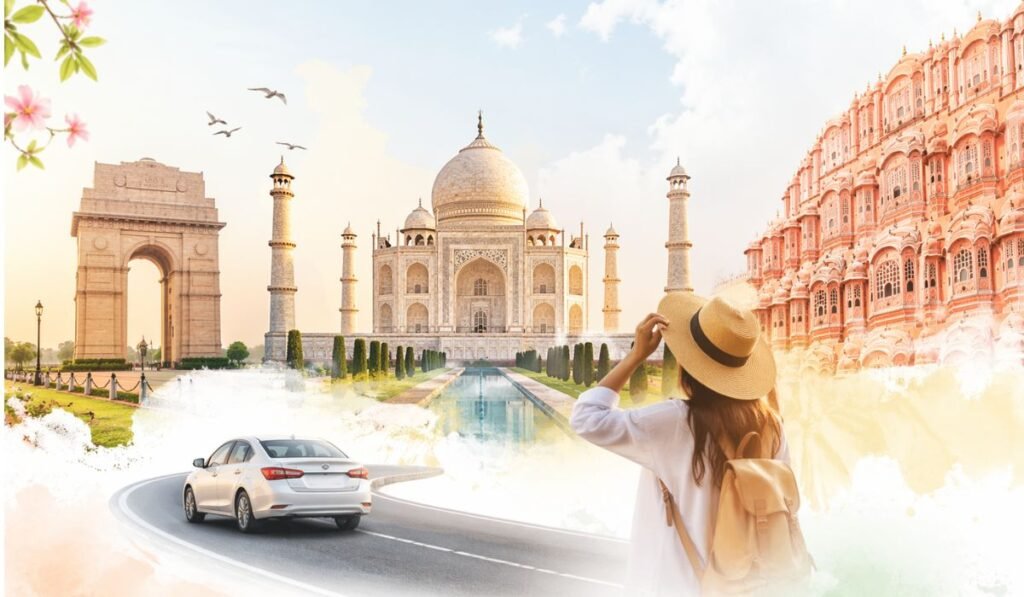
Planning your first trip to India can feel exciting—and a little overwhelming at the same time. With so many destinations, cultures, and experiences to choose from, it’s easy to get confused about where to begin. That’s exactly why the Golden Triangle route is considered the best starting point for first-time travelers.
Covering Delhi, Agra, and Jaipur, this well-connected travel circuit offers a perfect mix of history, architecture, culture, and local experiences. From witnessing the sunrise at the Taj Mahal to exploring royal palaces in Jaipur and bustling markets in Delhi, this journey gives you a complete snapshot of India in a manageable timeframe.
In this step-by-step guide, you’ll learn how to plan your trip efficiently—without stress, confusion, or common beginner mistakes.
What is the Golden Triangle Route?
The Golden Triangle is India’s most popular travel circuit, forming a triangular route between three iconic cities:
- Delhi – The capital city, where ancient monuments coexist with modern infrastructure. Expect historic forts, street food, and vibrant markets.
- Agra – A city steeped in Mughal history, best known for the Taj Mahal but also home to impressive forts and tombs.
- Jaipur – The Pink City of Rajasthan, famous for royal palaces, colorful bazaars, and grand forts.
What makes this route special is not just the destinations, but how well they complement each other. You experience Mughal grandeur, Rajput royalty, and urban India—all in one journey.
From a travel planning perspective, the distances between these cities (200–300 km each) make it ideal for a short yet fulfilling trip.
Best Time to Plan the Trip
Timing plays a crucial role in shaping your travel experience in India.
Winter (October to March) – Ideal Season
This is widely considered the best time to explore the Golden Triangle. The weather remains pleasant, making sightseeing comfortable. It’s also perfect for photography, especially at monuments like the Taj Mahal and Amber Fort.
Expert Tip: Book hotels and transport in advance during peak winter months (December–January), as demand is high.
Summer (April to June) – Challenging but Manageable
Temperatures can rise above 40°C, particularly in Jaipur and Agra. While sightseeing becomes tiring during the day, early morning and evening visits are still possible.
Who should consider this?
Budget travelers looking for discounted hotel rates.
Monsoon (July to September) – Underrated Option
The landscapes become greener, and tourist crowds reduce significantly. However, humidity and occasional rainfall can affect travel plans.
Travel Insight: Monsoon is great for photographers who enjoy dramatic skies and fewer crowds.
Ideal Trip Duration
Choosing the right duration depends on your travel style, pace, and interests.
- 3 Days: Suitable only if you’re short on time. Expect a fast-paced trip with limited exploration.
- 4 Days: A better option, but still slightly rushed.
- 5 Days: The most recommended duration for first-time travelers. Offers a comfortable balance between sightseeing and relaxation.
- 6–7 Days: Ideal for deeper exploration, cultural activities, and local experiences.
Experience-Based Recommendation: If this is your first visit to India, avoid rushing. A slower pace allows you to absorb the culture, not just check off landmarks.
Step-by-Step Planning Guide
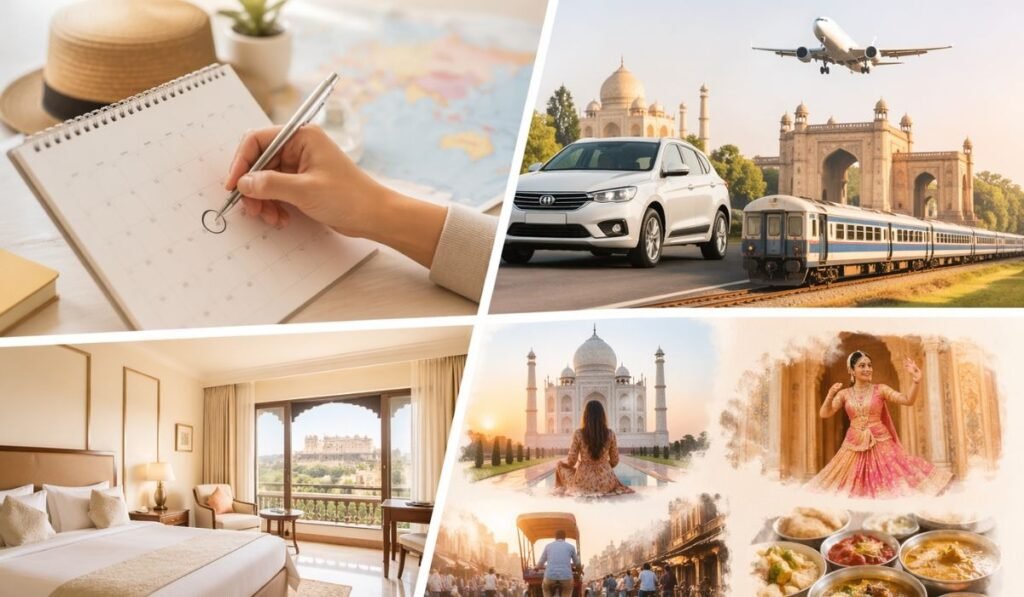
Step 1: Decide Travel Dates
Start by selecting travel dates based on weather and your personal schedule. If possible, avoid peak summer unless you are comfortable with heat.
Also, consider Indian festivals like Diwali or Holi—they can enhance your experience but may require early bookings.
Step 2: Choose Route & Transport
There are multiple ways to travel between Delhi, Agra, and Jaipur:
- Private Car: Flexible, comfortable, and ideal for first-time visitors
- Train: Cost-effective and relatively fast, but requires planning and punctuality
- Flights: Limited practicality due to short distances
Expert Insight: A private car with a driver is often the easiest and safest option, especially for international travelers unfamiliar with Indian transport systems.
Step 3: Select Accommodation
India offers a wide range of accommodation options:
- Budget hotels and hostels
- Mid-range boutique hotels
- Luxury heritage properties (especially in Jaipur)
Pro Tip: Stay in centrally located areas to save travel time and improve accessibility to attractions.
Step 4: Plan Experiences (Not Just Attractions)
Instead of overloading your schedule with monuments, focus on meaningful experiences:
- Sunrise visit to the Taj Mahal
- Rickshaw ride in Old Delhi
- Cultural evening in Jaipur
- Local food exploration
This approach aligns with modern travel trends and creates more memorable experiences.
Step 5: Book in Advance
Advance booking helps you:
- Secure better prices
- Avoid last-minute stress
- Ensure availability during peak seasons
Book your accommodation, transport, and major entry tickets ahead of time.
Must-Visit Highlights
No Golden Triangle trip is complete without experiencing these iconic landmarks:
- Taj Mahal (Agra): A UNESCO World Heritage Site and one of the Seven Wonders of the World
- Amber Fort (Jaipur): A magnificent hilltop fort showcasing Rajput architecture
- India Gate (Delhi): A historic war memorial and a symbol of national pride
Beyond these, each city offers hidden gems—local markets, street food, and cultural experiences that add depth to your journey.
Budget Planning Tips
Understanding your budget helps you plan better and avoid overspending.
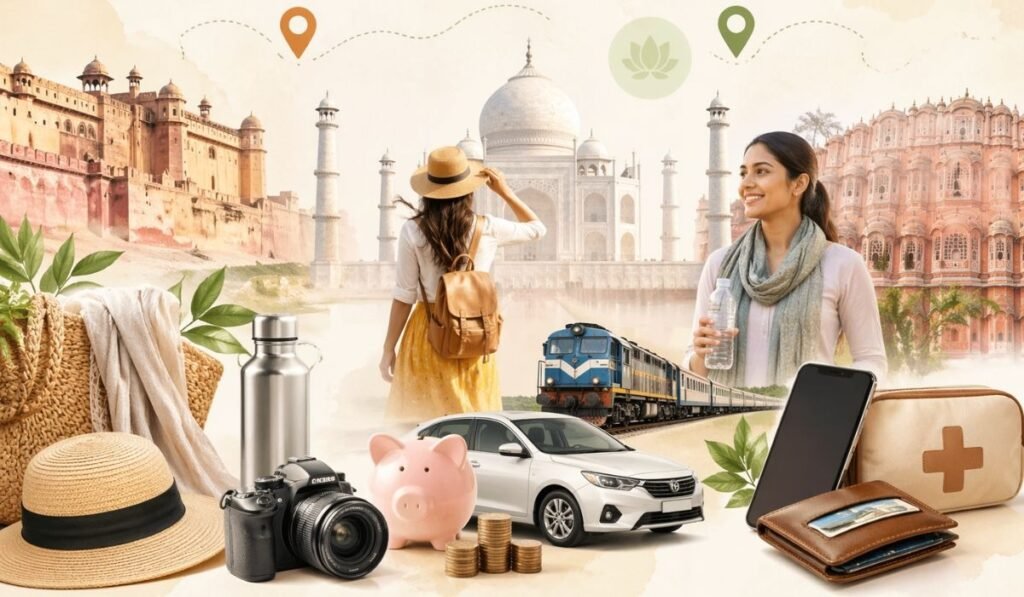
Budget Travelers
- Stay in hostels or budget hotels
- Use trains or shared transport
- Eat at local restaurants
Mid-Range Travelers
- 3-star hotels
- Private car transport
- Guided tours for major attractions
Luxury Travelers
- Heritage hotels and 5-star properties
- Private chauffeur-driven cars
- Personalized experiences
Smart Saving Tips:
- Travel during shoulder season
- Book in advance
- Compare prices across platforms
- Avoid tourist traps and overpriced guides
Travel Tips for First-Time Visitors
If you’re visiting India for the first time, these practical tips will help you travel confidently:
- Dress modestly, especially at religious sites
- Carry bottled water and stay hydrated
- Use trusted transportation services
- Keep copies of important documents
- Use cash and digital payments (both are widely accepted)
Safety Insight: India is generally safe for tourists, but like any destination, awareness and basic precautions are important.
Common Mistakes to Avoid
Many first-time travelers make avoidable mistakes. Here’s what to watch out for:
- Overplanning: Trying to see everything in limited time leads to exhaustion
- Ignoring Travel Time: Distances may look short but can take longer due to traffic
- Choosing the Wrong Season: Extreme heat can impact your experience
- Last-Minute Bookings: Can result in higher costs and limited availability
Expert Advice: Focus on quality experiences rather than quantity.
Make Your Trip Easier
While planning independently gives flexibility, it can also be time-consuming—especially if you’re unfamiliar with India.
If you prefer a hassle-free experience, you can explore curated travel options that handle transport, accommodation, and local guidance for you.
If you prefer a ready-made experience, explore our Golden Triangle tour packages
FAQs
1. How many days are enough for this trip?
A 5-day trip is ideal for a balanced and comfortable experience.
2. Is it safe for foreign tourists?
Yes, the route is one of the safest and most tourist-friendly in India.
3. What is the best way to travel between cities?
A private car is the most convenient and flexible option.
4. Can I do this trip solo?
Yes, it’s a popular choice for solo travelers, including international visitors.
5. Do I need a guide?
Not mandatory, but hiring a guide can enhance your understanding of history and culture.
6. Is this route suitable for families?
Absolutely. With proper planning, it’s comfortable and enjoyable for families.
7. What should I pack?
Light clothing (seasonal), comfortable shoes, sunscreen, and essential documents.
Final Thoughts
Planning a Golden Triangle journey doesn’t have to be complicated. With the right approach, you can create a smooth, enriching, and memorable travel experience.
By focusing on the right season, balanced duration, practical transport, and meaningful experiences, you’ll not only explore India’s most iconic destinations—but also enjoy the journey along the way.
Take your time, plan smartly, and most importantly—immerse yourself in the experience.